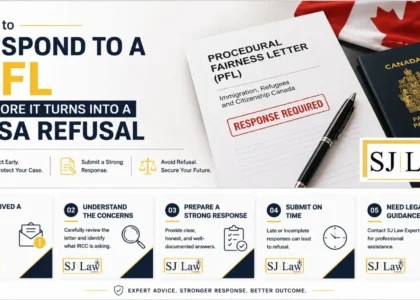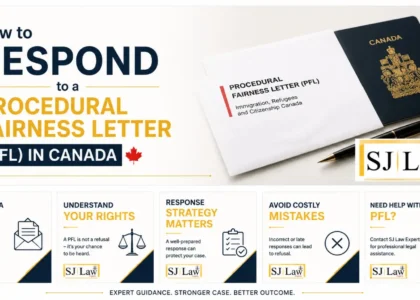
Responding to an IRCC PFL from Pakistan is not just about sending a simple explanation, it is a legal exercise that requires precision, structure, and persuasive evidence. In 2026, immigration officers rely on advanced verification systems, digital footprints, and cross-referenced data to assess credibility. This means your response must go beyond basic clarification and instead present a legally structured submission that directly addresses every concern raised by Immigration, Refugees and Citizenship Canada (IRCC)
For applicants in Pakistan, the stakes are even higher due to increased scrutiny on financial documents, employment records, and agent-assisted applications. A poorly written response can lead to refusal or even a 5-year ban for misrepresentation, while a strong legal submission can completely reverse the outcome. This guide explains how to craft a powerful, evidence-based response to an IRCC PFL from Pakistan, using advanced legal strategies aligned with current immigration standards.
Understanding the Purpose of an IRCC PFL
An IRCC PFL from Pakistan is issued when an immigration officer identifies serious concerns in your application but has not yet made a final decision. These concerns may involve document authenticity, financial inconsistencies, relationship doubts, or employment verification issues.
The PFL serves a legal purpose, it ensures procedural fairness by giving you a chance to respond before refusal. However, this is not an informal request. It is a formal legal opportunity, and your response is treated as part of the official record. Anything you submit can directly influence the officer’s final decision.
In 2026, IRCC officers expect responses to be:
- Structured and logical
- Supported by verifiable evidence
- Consistent with previously submitted documents
A weak or vague explanation is often interpreted as an inability to defend your case.
Key Elements of a Strong Legal Submission
A successful response to an IRCC PFL from Pakistan must include several critical components. Each element plays a role in building credibility and addressing the officer’s concerns effectively.
1. Clear Issue Identification
Start by clearly identifying the concerns raised in the PFL. This shows that you understand the issue and are addressing it directly.
For example:
- Alleged fake bank statement
- Employment inconsistency
- Relationship authenticity concerns
Avoid general statements. Be specific and structured.
2. Fact-Based Explanation
Your explanation should be factual, not emotional. Immigration officers are not influenced by sympathy, they rely on evidence and consistency.
A strong explanation:
- Directly answers the concern
- Avoids unnecessary details
- Maintains a professional tone
If there was an error, acknowledge it honestly and provide clarification.
3. Supporting Evidence
Evidence is the backbone of your submission. Without it, your explanation holds little value.
Depending on your case, include:
- Original bank statements and verification letters
- Employment contracts and salary slips
- Communication records for relationship cases
- Affidavits or sworn statements
In 2026, IRCC increasingly verifies documents directly with institutions, so authenticity is critical.
4. Legal Framing of Your Argument
A strong submission frames your response within legal reasoning. This means explaining why the concern does not amount to misrepresentation or ineligibility.
For example:
- Clarify that discrepancies were unintentional
- Demonstrate transparency and good faith
- Show that the core requirements are still met
This approach shifts your response from a simple explanation to a legal defense.
5. Structured Format
Your submission should follow a professional structure:
- Introduction
- Summary of IRCC concerns
- Detailed response to each concern
- Supporting evidence list
- Conclusion
A well-organized document improves readability and strengthens your credibility.
Step-by-Step Guide to Writing Your Submission
Step 1: Analyze the PFL Carefully
Read the letter multiple times. Identify:
- Exact concerns
- Referenced documents
- Deadline for response
Misunderstanding the issue is one of the most common mistakes.
Step 2: Collect Strong Evidence
Gather all relevant documents. Ensure they are:
- Genuine
- Consistent
- Verifiable
Avoid submitting unnecessary documents that do not address the issue.
Step 3: Draft a Professional Explanation Letter
Write your response in a clear and structured manner.
Focus on:
- Addressing each concern individually
- Linking explanations with evidence
- Maintaining a formal tone
Avoid emotional language or defensive arguments.
Step 4: Review for Consistency
Ensure your submission matches:
- Your original application
- Supporting documents
- Previous statements
Any inconsistency can weaken your case.
Step 5: Submit Before Deadline
Deadlines are strict. Late submissions are often not considered.
Common Mistakes to Avoid
Applicants responding to an IRCC PFL from Pakistan often make critical errors that lead to refusal.
Avoid:
- Ignoring specific concerns in the letter
- Submitting fake or altered documents
- Providing vague or generic explanations
- Missing the deadline
- Overloading the response with irrelevant information
A precise and focused response is far more effective than a lengthy but unfocused one.
Advanced Strategies for 2026 Applications
In today’s immigration environment, basic responses are no longer enough. You need a strategic approach.
- Consistency is Key: Every detail must align across documents and explanations.
- Evidence Hierarchy: Prioritize official and verifiable documents over informal evidence.
- Digital Footprint Awareness: IRCC may review online presence and cross-check information.
- Proactive Clarification: Address potential doubts even if they are not explicitly mentioned.
Role of SJ Law Experts in PFL Responses
Handling an IRCC PFL from Pakistan requires legal expertise and strategic planning.
SJ Law Experts specialize in:
- Drafting strong legal submissions
- Analyzing complex immigration cases
- Preparing evidence-based responses
- Reducing risk of refusal or bans
Their experience ensures that your response meets professional and legal standards, significantly improving your chances of approval.
Real Case Insight
Consider two applicants:
- One submits a generic explanation without evidence → Application refused
- Another submits a structured legal response with verified documents → Concerns resolved → Visa approved
The difference lies in the quality of the submission.
Conclusion
Writing a strong legal submission for an IRCC PFL from Pakistan is a critical step that can determine the outcome of your immigration application. It is not just about explaining your situation, it is about presenting a clear, consistent, and evidence-backed defense that addresses IRCC’s concerns directly. In 2026, where immigration systems are more advanced and scrutiny is higher, applicants must adopt a strategic and professional approach. A well-prepared submission can reverse negative impressions, while a weak response can lead to refusal or long-term consequences.
If your case involves complex issues or high risk, seeking professional guidance from SJ Law Experts can provide the expertise needed to protect your application and improve your chances of success.
FAQs
1. What is an IRCC PFL from Pakistan?
It is a letter issued by IRCC asking you to respond to concerns before making a final decision on your application.
2. How long do I have to respond to a PFL?
Usually between 7 to 30 days, depending on the case.
3. Can I get approval after a PFL?
Yes, many applicants are approved after submitting a strong response.
4. What happens if I submit a weak response?
A weak response often leads to visa refusal or further scrutiny.
5. Can SJ Law Experts help with legal submissions?
Yes, they provide professional assistance in drafting strong, evidence-based responses.