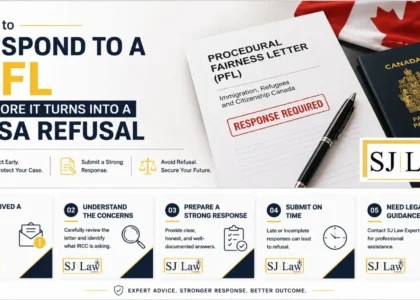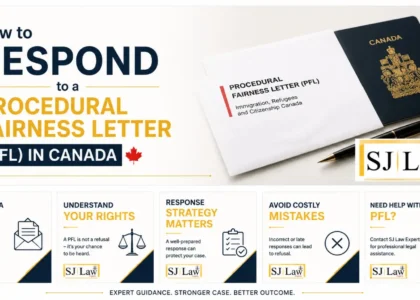
Facing allegations of misrepresentation in an IRCC from Pakistan case is one of the most serious challenges an immigration applicant can encounter. In 2026, Immigration, Refugees and Citizenship Canada (IRCC) significantly strengthened its fraud detection systems, using advanced document verification, financial tracking, and cross-border data validation. This means even minor inconsistencies in your application, especially related to bank statements, employment, or identity, can trigger a Procedural Fairness Letter (PFL) and potential misrepresentation concerns.
Understanding Misrepresentation in IRCC Cases
Misrepresentation occurs when an applicant provides false, misleading, or incomplete information that could influence an immigration decision. In the context of IRCC from Pakistan, common triggers include:
- Fake or altered bank statements
- Incorrect employment details
- Misleading relationship information
- Inconsistent travel or identity records
Even unintentional errors can be classified as misrepresentation if they affect the officer’s assessment. That’s why your response must focus on clarifying intent, correcting discrepancies, and proving authenticity through documents.
Core Document Categories for Defense
To successfully defend against misrepresentation allegations in an IRCC from Pakistan case, your submission must include a combination of primary and supporting documents. Each category plays a specific role in strengthening your credibility.
1. Financial Documents (Proof of Funds Verification)
Financial inconsistencies are one of the most common reasons for PFL issuance.
Essential Documents
- Original bank statements (6–12 months)
- Bank-issued verification letter
- Transaction history with official stamp
- Source of funds proof (salary slips, business income, tax returns)
Strategic Tip: If there are large deposits, provide a clear explanation with supporting evidence such as sale deeds, gift deeds, or loan agreements. In 2026, IRCC often verifies bank records directly, so authenticity is critical.
2. Employment and Income Proof
If your employment history is questioned, you must provide detailed and verifiable proof.
Required Documents
- Employment letter (signed and stamped)
- Salary slips
- Tax returns or NTN records
- Employer verification letter
- Company registration documents (for business owners)
Advanced Insight: Ensure that your employment details match across all documents, including your application forms and LinkedIn or profiles.
3. Identity and Civil Documents
Identity inconsistencies can raise serious concerns in an IRCC from Pakistan case.
Key Documents
- Valid passport copies
- CNIC (National Identity Card)
- Birth certificate
- Family registration certificate
These documents must be consistent and free from discrepancies in names, dates, and spellings.
4. Relationship Evidence (For Family or Spousal Cases)
If your application involves a spouse or partner, IRCC may question the genuineness of the relationship.
Supporting Documents
- Marriage certificate (NADRA verified)
- Wedding photos and videos
- Communication records (calls, chats)
- Travel history together
- Affidavits from family members
Strategic Tip: Organize relationship evidence chronologically to present a clear timeline.
5. Affidavits and Explanation Letters
An affidavit is a sworn statement that adds legal weight to your explanation.
What to Include
- Explanation of the issue
- Clarification of discrepancies
- Statement of intent and honesty
Affidavits should be notarized and supported by evidence.
6. Third-Party Verification Documents
In cases where IRCC doubts authenticity, third-party verification becomes essential.
Examples
- Bank confirmation letters
- Employer verification emails
- Educational institution verification
- Legal contracts or agreements
These documents provide independent confirmation of your claims.
7. Communication with Agents (If Applicable)
If your case involves an agent who submitted incorrect documents, include proof of communication.
Relevant Evidence
- Emails or WhatsApp chats with the agent
- Payment receipts
- Agreements or contracts
This helps demonstrate lack of intent in cases of misrepresentation.
How to Organize Your Document Submission
Submitting the right documents is only part of the process, presentation matters equally.
Best Practices
- Create a document index
- Label each document clearly
- Match documents with specific concerns
- Maintain a logical flow
A well-organized submission makes it easier for the officer to review your case and increases your credibility.
Common Mistakes to Avoid
Applicants defending IRCC from Pakistan cases often make errors that weaken their response.
Avoid:
- Submitting fake or altered documents again
- Providing incomplete financial records
- Ignoring specific concerns in the PFL
- Overloading with irrelevant documents
- Missing the submission deadline
Precision and relevance are more important than volume.
Advanced Strategies for 2026 Applications
In today’s immigration landscape, a basic response is not enough.
- Evidence Consistency: All documents must align perfectly with your explanation.
- Source Transparency: Clearly show where funds, employment, or claims originate.
- Digital Verification Awareness: Assume that IRCC may cross-check your data online and with institutions.
- Proactive Clarification: Address potential doubts even if not explicitly mentioned.
Role of SJ Law Experts in Misrepresentation Defense
Defending misrepresentation claims in an IRCC from Pakistan case requires legal expertise and strategic planning.
SJ Law Experts provide:
- Detailed case analysis
- Professional document preparation
- Strong legal submission drafting
- Guidance for complex and high-risk cases
Their experience ensures that your response is not only complete but also legally persuasive.
Real Case Insight
Consider two scenarios:
- Applicant submits partial documents → IRCC not satisfied → Refusal
- Applicant submits complete, verified evidence with clear explanation → Concerns resolved → Approval
The difference lies in the quality and organization of documents.
Conclusion
Defending misrepresentation claims in an IRCC from Pakistan case is a high-stakes process that demands accuracy, transparency, and strong documentation. Every document you submit must support your explanation and reinforce your credibility. In 2026, with advanced verification systems and stricter scrutiny, applicants must go beyond basic responses and adopt a strategic, evidence-based approach. A well-prepared submission can resolve even serious concerns, while a weak one can lead to refusal or long-term consequences.
If your case involves complex issues, professional support from SJ Law Experts can help you build a strong defense and significantly improve your chances of success.
FAQs
1. What documents are most important in an IRCC PFL case?
Financial records, employment proof, and identity documents are the most critical.
2. Can I submit new documents after receiving a PFL?
Yes, a PFL allows you to provide additional evidence to support your case.
3. What happens if my documents are inconsistent?
Inconsistencies can lead to refusal or misrepresentation findings.
4. Do affidavits help in PFL cases?
Yes, especially when supported by strong evidence.
5. Can SJ Law Experts help with document preparation?
Yes, they provide professional assistance to ensure your submission is complete and effective.