A USCIS denial is not always the end of your immigration journey. Many applicants successfully challenge unfavorable decisions, but understanding why a USCIS Motion to Reopen gets denied is critical if you want to avoid repeating the same mistakes and improve your chances of success. Receiving a denial from the United States Citizenship and Immigration Services (USCIS) can be devastating. Whether the application involves a family-based petition, employment-based immigration benefit, adjustment of status, or another immigration matter, a denial often leaves applicants uncertain about their next steps. Fortunately, U.S. immigration law provides several remedies that may allow applicants to challenge an unfavorable decision, including filing a USCIS Motion to Reopen.
A Motion to Reopen is a formal request asking USCIS to review a previously denied case based on new facts or evidence that was not available during the original adjudication. While this legal remedy can be highly effective, many motions are denied because applicants fail to meet procedural requirements or submit insufficient evidence.
Understanding a USCIS Motion to Reopen
A USCIS Motion to Reopen is a legal filing that requests USCIS to reconsider a denied application or petition based on new evidence or facts. Unlike a Motion to Reconsider, which argues that USCIS incorrectly applied the law or policy, a Motion to Reopen focuses on presenting new information that could affect the outcome of the case. The purpose of a Motion to Reopen is to provide USCIS with evidence that was unavailable or undiscovered at the time of the original decision. If the new evidence is compelling and relevant, USCIS may reopen the case and conduct a fresh review. This remedy can be particularly valuable when applicants discover missing documentation, obtain new supporting evidence, or experience changes in circumstances that strengthen their eligibility.
Common Reasons USCIS Motions to Reopen Get Denied
Failure to Provide New Evidence
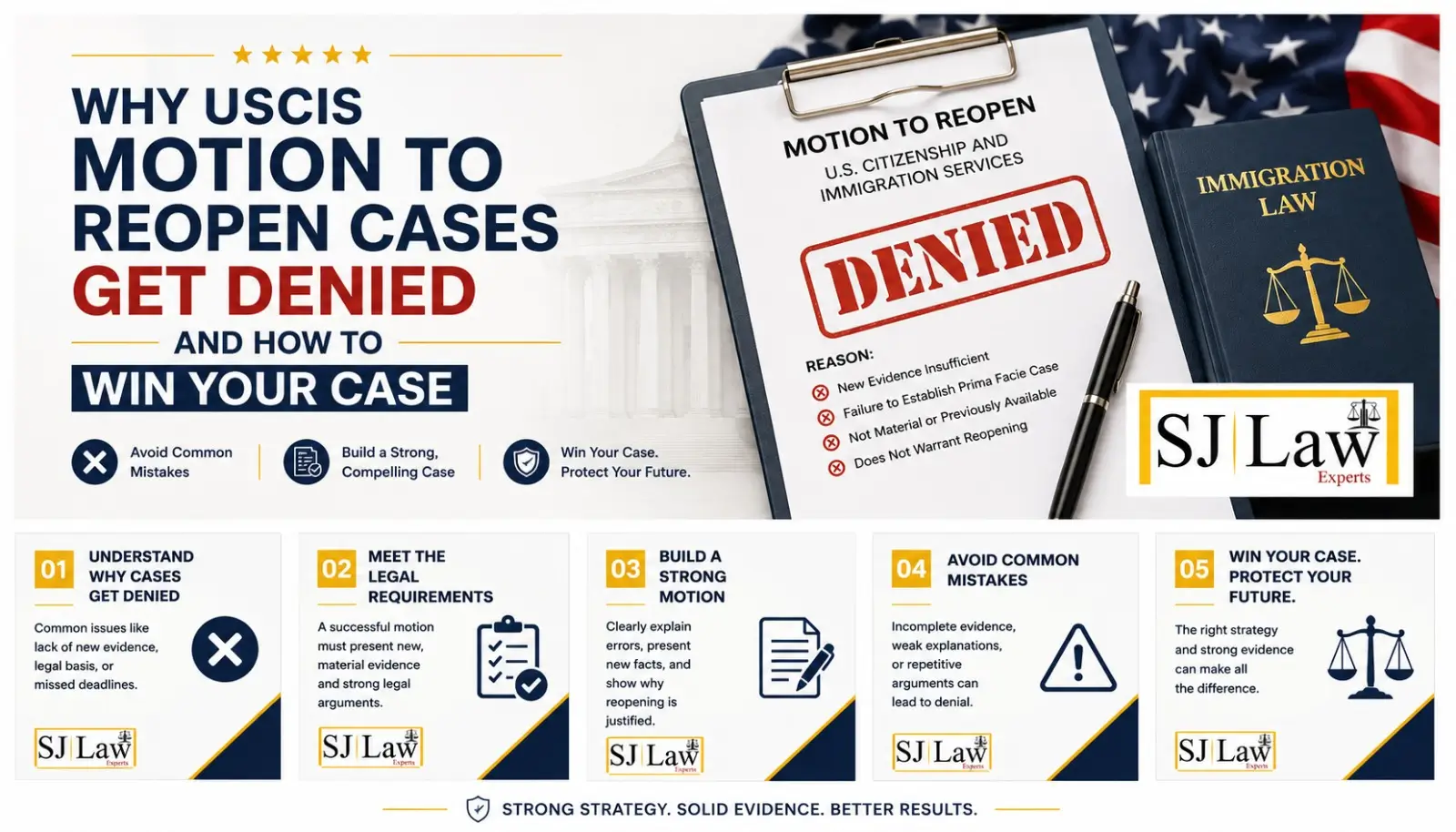
One of the most common reasons a USCIS Motion to Reopen is denied is the absence of genuinely new evidence. USCIS expects applicants to present facts or documents that were not available during the initial review. Many applicants simply resubmit the same evidence that was previously considered. When no new information is introduced, USCIS may determine that reopening the case is unnecessary. To increase the likelihood of approval, applicants should provide documentation that directly addresses the reasons for the original denial and demonstrates why the case deserves reconsideration.
Missing Filing Deadlines
Immigration procedures are governed by strict deadlines. A Motion to Reopen generally must be filed within the timeframe established by USCIS regulations. Late filings may be rejected unless exceptional circumstances justify the delay. Applicants should carefully review denial notices and consult legal counsel promptly to avoid missing critical deadlines.
Inadequate Supporting Documentation
Strong evidence is essential when seeking to Reopen immigration case USA. USCIS officers evaluate whether the new information materially changes the case. Applications supported by weak, incomplete, or irrelevant documentation often face denial. Every document submitted should directly address the concerns identified in the original decision.
Failure to Address the Original Denial
Another common mistake occurs when applicants submit new evidence without specifically responding to the issues raised in the denial notice. For example, if USCIS denied a petition due to insufficient financial evidence, submitting unrelated documents may not help. The motion should directly address the officer’s concerns and explain how the new evidence resolves those issues.
Procedural Errors
Technical mistakes can also result in denial. Common procedural issues include:
- Incorrect filing forms
- Missing signatures
- Incomplete applications
- Filing fee errors
- Failure to submit required supporting documents
Even strong cases can encounter difficulties if procedural requirements are overlooked.
How to Build a Strong Immigration Appeal USA Strategy
A successful Immigration Appeal USA strategy begins with understanding the exact reasons behind the denial. Applicants should thoroughly review the denial notice and identify the specific legal and factual issues that influenced the decision. Every motion should be carefully tailored to address those concerns. Generic responses rarely succeed because USCIS expects applicants to demonstrate how new evidence changes the original analysis. Developing a comprehensive legal strategy often involves collecting additional documentation, obtaining expert opinions, and preparing detailed explanations that clarify previously disputed facts.
Key Evidence That Can Strengthen Your Motion
The strength of a Motion to Reopen often depends on the quality of evidence submitted. Depending on the case type, useful evidence may include:
- Updated Financial Documentation: Financial records can demonstrate eligibility in cases involving sponsorship, business petitions, or public charge concerns.
- New Employment Records: Employment verification letters, payroll records, and updated contracts may help strengthen employment-based immigration cases.
- Medical Evidence: Medical reports and supporting documentation can be critical when health-related circumstances affect eligibility or procedural deadlines.
- Family and Relationship Evidence: Additional documentation may help establish the legitimacy of family-based immigration petitions. The goal is to provide evidence that directly addresses the deficiencies identified in the original decision.
Reopen Immigration Case USA: Best Practices
When seeking to reopen an immigration case in the USA, applicants should focus on presenting a well-organized and persuasive filing.
Best practices include:
- Carefully reviewing the denial notice.
- Gathering substantial new evidence.
- Preparing a detailed legal explanation.
- Addressing every issue raised by USCIS.
- Ensuring complete procedural compliance.
- Seeking professional legal guidance.
A well-prepared motion demonstrates credibility and helps immigration officers understand why the case deserves a second review.
Understanding the Difference Between Appeals and Motions
Many applicants confuse appeals and motions, but they serve different purposes.
| Feature | Motion to Reopen | Appeal |
| Purpose | Present new evidence | Challenge legal decision |
| Reviewed By | USCIS | Administrative Appeals Office (AAO) or other authority |
| Focus | New facts and documentation | Errors in law or policy |
| Evidence Required | Yes | Usually based on existing record |
Understanding these differences helps applicants select the most appropriate remedy for their situation.
Common Mistakes to Avoid
Applicants frequently undermine their cases by making avoidable errors, including:
- Filing without legal analysis.
- Ignoring denial reasons.
- Submitting duplicate evidence.
- Missing deadlines.
- Providing inconsistent information.
- Failing to organize supporting documents.
Avoiding these mistakes can significantly improve the chances of a favorable outcome.
How SJ Law Experts Helps
At SJ Law Experts, we understand that immigration denials can create uncertainty and stress for applicants and their families. Our legal team assists clients with Immigration Appeal USA matters by carefully reviewing denial notices, identifying legal issues, and developing customized strategies for reopening denied cases. We help clients prepare strong USCIS Motion to Reopen filings, gather supporting evidence, address procedural concerns, and present persuasive legal arguments. Whether you are seeking to Reopen immigration case USA or searching for a practical Denied petition solution, our goal is to maximize your chances of success while protecting your immigration interests. By combining legal knowledge, strategic planning, and detailed case preparation, SJ Law Experts helps clients navigate complex immigration challenges with confidence.
Conclusion
A denied immigration petition does not necessarily mean your case is over. Many applicants successfully challenge unfavorable decisions through a properly prepared USCIS Motion to Reopen. The key is understanding why motions are denied and taking proactive steps to address those issues. Whether your goal is pursuing an Immigration Appeal USA, seeking to Reopen immigration case USA, or finding an effective Denied petition solution, success depends on strong evidence, procedural compliance, and a carefully developed legal strategy. By addressing the original denial directly and presenting compelling new information, applicants can significantly improve their chances of obtaining a favorable outcome.
What is a USCIS Motion to Reopen?
It is a request asking USCIS to review a denied case based on new facts or evidence.
Why do Motions to Reopen get denied?
Common reasons include insufficient evidence, missed deadlines, and failure to address denial concerns.
Can I submit new evidence with a Motion to Reopen?
Yes, new and relevant evidence is the primary basis for a Motion to Reopen.
Is a Motion to Reopen the same as an appeal?
No. A motion presents new facts, while an appeal challenges the legal basis of a decision.
Should I hire a lawyer for an immigration appeal?
Professional legal guidance can help strengthen your case and improve compliance with USCIS requirements.