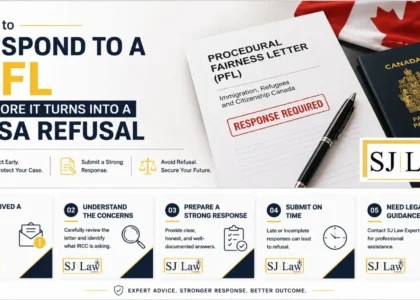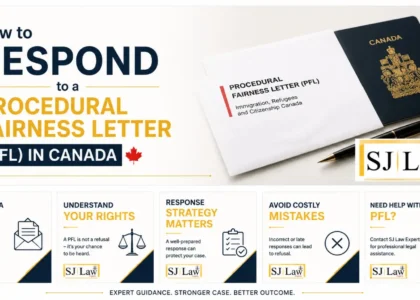
What is a Procedural Fairness Letter (PFL)?
If you are dealing with an IRCC PFL for Spousal Sponsorship, you are essentially at a critical legal crossroads. A Procedural Fairness Letter (PFL) is not a simple request for documents—it is a formal legal notice issued by Immigration, Refugees and Citizenship Canada (IRCC) when an officer has concerns that could lead to refusal. In spousal sponsorship cases, these concerns almost always relate to the genuineness of the relationship.
From a legal standpoint, a PFL is grounded in the principle of procedural fairness, which ensures that applicants are given an opportunity to respond before a negative decision is made. This is your right—but also your responsibility. A weak or incomplete response can legally justify refusal, and in some cases, even allegations of misrepresentation under Canadian immigration law.
Legal Importance of Responding Properly
Responding to a PFL is not just about telling your story—it is about presenting a legally persuasive case. Immigration officers are not influenced by emotions; they rely on facts, consistency, and documentary proof. This is where many applicants fail.
Think of your PFL response as a legal submission rather than a casual explanation. Every statement should be backed by evidence, and every document should reinforce your narrative.
Age Gap Concerns in Canadian Immigration Law
Age gaps are not illegal in Canadian immigration law. However, they are considered a risk indicator when assessing whether a marriage is genuine. Officers are trained to identify patterns that may suggest a marriage of convenience, and a significant age difference can sometimes fall into that category.
But here’s the key insight: age gap alone does not lead to refusal. It becomes problematic only when combined with other factors such as limited communication, short courtship, or lack of shared experiences. For example, a 15-year age difference supported by strong communication history and multiple visits is far more convincing than a 5-year gap with no evidence.
Legal Perspective on Genuine Relationships
Under Canadian immigration law, particularly Section 4 of the Immigration and Refugee Protection Regulations (IRPR), a relationship must be both:
- Genuine, and
- Not entered into primarily for immigration purposes
This dual requirement is critical. Even if your marriage is legally valid, it can still be refused if the officer believes it lacks genuineness. In age gap cases, officers often look deeper into emotional compatibility, communication patterns, and long-term intentions. Your evidence must clearly demonstrate that your relationship goes beyond convenience and reflects a genuine partnership.
Pakistan-Specific Challenges in Spousal Sponsorship
One of the biggest challenges in Pakistan spousal sponsorship cases is the gap between cultural practices and Canadian legal expectations. In Pakistan, arranged marriages are common, and age differences—especially where the husband is older—are widely accepted.
However, IRCC officers assess applications based on Canadian standards, not cultural norms. This creates a disconnect. What seems normal in Pakistan may appear unusual or suspicious to an immigration officer in Canada. This is why contextual explanation is essential. You must not assume that the officer understands your cultural background. Instead, you must clearly explain how your relationship aligns with cultural traditions while still meeting legal requirements.
Common Red Flags in Pakistan Cases
Certain patterns frequently trigger PFLs in Pakistan cases:
- Significant age gap without strong explanation
- Limited pre-marriage interaction
- Marriage arranged quickly with minimal documentation
- Lack of post-marriage communication evidence
- Inconsistent statements between spouses
These factors do not automatically lead to refusal, but they increase scrutiny. Addressing them proactively can significantly improve your chances of success.
Real Legal Grounds Behind IRCC PFL
Marriage of Convenience Rule
The legal foundation for most PFLs in spousal sponsorship cases lies in Section 4 of the IRPR. This section empowers officers to refuse applications if they believe the marriage is not genuine or was entered into primarily for immigration purposes. This is not a subjective decision—it must be based on evidence. However, the burden of proof lies on the applicant. This means you must prove your relationship is genuine, not the other way around.
Burden of Proof on Applicants
In legal terms, the burden of proof is on you. This is where many applicants misunderstand the process. They assume that submitting basic documents is enough—but in reality, you must actively prove your case. Strong applications go beyond minimum requirements. They include detailed timelines, consistent narratives, and comprehensive evidence that leaves no room for doubt.
Evidence Required to Overcome Age Gap Concerns
Primary Evidence
Primary evidence forms the backbone of your application. This includes:
- Communication records (calls, chats, emails)
- Travel history and visit stamps
- Photos across different timelines
- Financial support records
These documents show that your relationship is active and ongoing.
Secondary Supporting Evidence
Secondary evidence strengthens your case further:
- Affidavits from family and friends
- Wedding invitations and event records
- Social media interactions
- Proof of future plans
When combined, these pieces create a compelling narrative that supports genuineness.
How to Respond to IRCC PFL Professionally
Legal Strategy for Strong Response
A successful response requires a structured legal approach:
- Analyze each concern raised by IRCC
- Prepare a detailed explanation addressing every point
- Attach relevant evidence for each claim
- Organize documents in a clear and logical manner
This method ensures that your response is both comprehensive and persuasive.
Drafting a Persuasive Submission Letter
Your submission letter should be clear, concise, and legally sound. Avoid emotional language and focus on facts. Explain your relationship timeline, address the age gap, and provide context for any unusual elements.
Structuring Documentary Evidence
Documents should not be submitted randomly. Organize them in sections, label them clearly, and reference them in your explanation letter. This makes it easier for the officer to review your case.
Common Mistakes That Lead to Refusal
Weak Legal Arguments: Many applicants rely on emotional explanations rather than legal reasoning. This approach rarely works. Officers need evidence, not just words.
Incomplete Documentation: Submitting incomplete or repetitive documents weakens your case. Every document should add value and support your claims.
How SJ Law Experts Can Help
At SJ Law Experts, we specialize in handling complex IRCC PFL for Spousal Sponsorship cases, particularly those involving age gap concerns in Pakistan. Our approach is rooted in legal expertise, strategic documentation, and deep understanding of IRCC decision-making processes. We don’t just prepare responses, we build strong legal arguments supported by evidence. From drafting persuasive submission letters to organizing documentation, our goal is to maximize your chances of approval.
With professional guidance, you can avoid common pitfalls and present your case with confidence.
Conclusion
Handling an IRCC PFL for Spousal Sponsorship—especially in cases involving age gaps in Pakistan—is a serious legal matter that requires precision, strategy, and strong evidence. Age difference is not a refusal ground, but it demands careful explanation and documentation.
A well-prepared response can turn a potential refusal into an approval. With the right legal approach and professional guidance from SJ Law Experts, you can effectively address IRCC concerns and strengthen your case.
FAQs
1. Is age gap illegal in Canadian spousal sponsorship?
No, age gap is not illegal. It only becomes a concern if it raises doubts about relationship genuineness.
2. What is the success rate after PFL response?
Success depends on the quality of response and evidence. Strong legal submissions significantly improve approval chances.
3. How much time do I have to respond to a PFL?
Typically between 7 to 30 days, depending on the case.
4. Can I respond to PFL without a lawyer?
Yes, but it is risky. Legal guidance improves your chances of success.
5. What happens if I ignore a PFL?
Ignoring a PFL will almost certainly lead to refusal of your application.