A Canada visa refusal can feel like a closed door, but in many cases, it is simply a signal that your application needs stronger evidence, clearer documentation, or a better explanation. Understanding why your visa was refused is the first step toward a successful approval. Canada remains one of the most popular destinations for Pakistani applicants seeking tourism, education, employment, and family reunification opportunities. Every year, thousands of individuals submit applications to Immigration, Refugees and Citizenship Canada (IRCC) with hopes of obtaining a visitor visa, study permit, or work permit. However, many applicants receive a Canada Visa Refusal, often without fully understanding the reasons behind the decision.
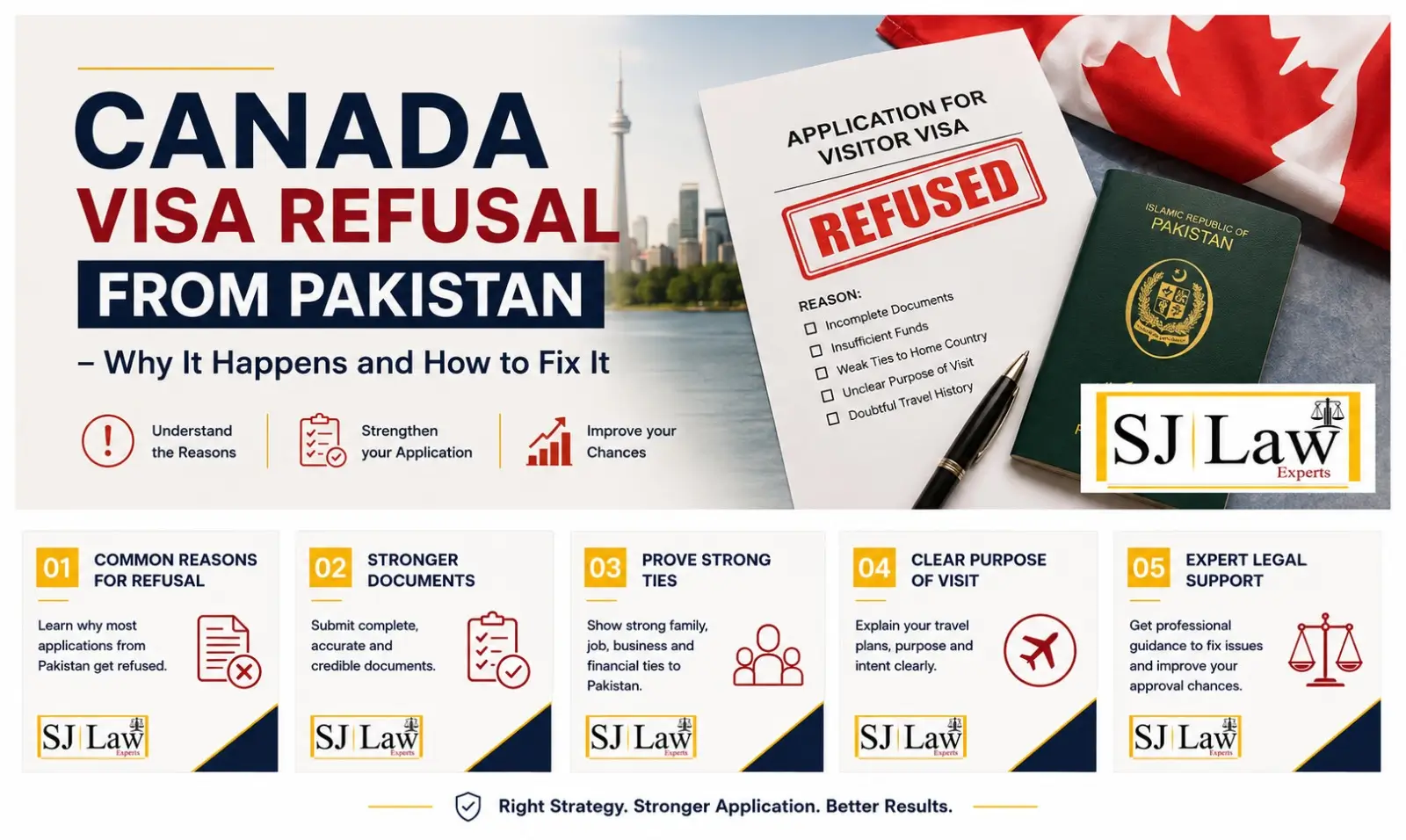
A visa refusal does not necessarily mean you are ineligible to travel to Canada. In many cases, applications are refused because the visa officer was not satisfied with the evidence provided or had concerns regarding the applicant’s intentions, finances, or supporting documents. Understanding the common reasons behind a Canada Visa Refusal can help applicants address weaknesses and improve their chances of success when they Reapply Canada visa.
Understanding Canada Visa Refusal
A Canada Visa Refusal occurs when an immigration officer determines that an applicant has not met the requirements of Canada’s immigration laws and regulations. Every application is reviewed individually, and officers assess various factors before making a decision. Visa officers evaluate financial resources, travel history, employment status, family ties, purpose of travel, immigration history, and supporting documentation. If the officer is not convinced that the applicant meets the eligibility criteria, the application may be refused. Many applicants mistakenly believe that submitting more documents guarantees approval. In reality, the quality, consistency, and credibility of the information provided are far more important than the quantity of documents submitted.
Common IRCC Refusal Reasons
Insufficient Financial Evidence
One of the most common IRCC refusal reasons involves financial concerns. Applicants must demonstrate that they have enough funds to cover their travel, living expenses, tuition fees, or other costs associated with their stay in Canada. Visa officers often review bank statements, income records, tax documents, and financial sponsorship evidence. Unexplained deposits, inconsistent account activity, or weak financial documentation can raise concerns about the source and availability of funds. Applicants should ensure that financial documents clearly demonstrate stability, legitimacy, and sufficient resources to support their intended stay.
Weak Home Country Ties
Canadian immigration officers must be satisfied that temporary residents will leave Canada at the end of their authorized stay. If an applicant cannot demonstrate strong ties to Pakistan, the officer may question their intention to return.
Strong ties may include:
- Stable employment
- Family responsibilities
- Property ownership
- Business interests
- Educational commitments
When these connections are not adequately documented, a Canada Visa Refusal may occur due to concerns regarding immigration intent.
Unclear Purpose of Visit
Applicants must provide a clear and convincing explanation of why they wish to travel to Canada. Whether applying for tourism, study, business, or family visits, the purpose must be supported by relevant documentation. For example, a visitor visa application should include a travel itinerary, invitation letter if applicable, accommodation details, and supporting evidence explaining the planned activities. If the purpose of travel appears vague or inconsistent, the officer may conclude that the applicant has not established a genuine reason for visiting Canada.
Limited Travel History
Although a lack of travel history alone does not automatically result in refusal, it may influence the officer’s overall assessment. Previous international travel demonstrates compliance with immigration rules and can strengthen credibility. Applicants with limited travel experience should focus on providing strong evidence regarding finances, employment, family ties, and travel purpose to compensate for the absence of extensive travel records.
Incomplete or Inaccurate Documentation
Errors, omissions, and inconsistencies are frequent causes of visa refusals. Missing documents, incorrect information, conflicting statements, or poorly prepared applications can significantly reduce approval chances. Every document submitted should be accurate, consistent, and professionally prepared. Even minor discrepancies may raise concerns about the reliability of the application.
Why Canada Visa Applications from Pakistan Get Rejected
When discussing Canada visa rejected Pakistan cases, several recurring patterns emerge. Many refusals result from weak financial documentation, unclear study plans, insufficient proof of employment, or inadequate evidence of family ties. Some applicants submit documents without fully understanding what immigration officers are evaluating. Others rely on generic explanations that fail to address their specific circumstances. Pakistani applicants often improve their approval chances by presenting detailed evidence, maintaining transparency, and ensuring that all supporting documents align with the information provided in the application.
How to Fix a Canada Visa Refusal
Review the Refusal Letter Carefully
The first step after receiving a refusal is understanding the officer’s concerns. The refusal letter usually identifies the categories that influenced the decision. Applicants should carefully review every reason listed and avoid rushing into a new application without addressing those concerns.
Obtain GCMS Notes
GCMS Notes provide detailed internal comments made by the visa officer during the assessment process. These notes often reveal specific concerns that are not fully explained in the refusal letter. Reviewing GCMS Notes helps applicants understand exactly why their application was refused and what improvements are necessary before reapplying.
Strengthen Supporting Evidence
A successful reapplication requires more than simply submitting the same documents again. Applicants should address every concern raised by the officer.
Examples include:
- Providing stronger financial documentation.
- Obtaining updated employment letters.
- Demonstrating stronger family and economic ties.
- Explaining previous inconsistencies.
- Submitting a more detailed travel or study plan.
Each improvement should directly respond to the refusal reasons identified in the previous application.
Seek Professional Guidance
Immigration laws and procedures can be complex. Professional legal or immigration guidance may help identify weaknesses that applicants overlook. An experienced advisor can review the refusal reasons, assess supporting documents, and develop a stronger strategy for a future application.
When to Reapply Canada Visa
There is no mandatory waiting period after most visa refusals. However, applicants should avoid submitting a new application until they have adequately addressed the issues that caused the refusal. Simply reapplying without making meaningful improvements often leads to another refusal. Instead, applicants should take the time to gather stronger evidence and prepare a more convincing application. The decision to Reapply Canada visa should be based on correcting previous weaknesses rather than hoping for a different outcome with the same information.
Best Practices to Improve Approval Chances
To maximize success, applicants should:
- Submit complete and accurate documentation.
- Maintain consistent information throughout the application.
- Demonstrate sufficient financial resources.
- Clearly explain the purpose of travel.
- Provide evidence of strong ties to Pakistan.
- Respond honestly to all immigration questions.
- Address previous refusal concerns directly.
A well-prepared application demonstrates credibility and reduces uncertainty for immigration officers.
How SJ Law Experts Helps
Navigating a Canada Visa Refusal can be challenging, especially when the refusal letter provides limited information. At SJ Law Experts, we assist clients in understanding the exact reasons behind visa refusals and developing effective strategies for reapplication. Our team carefully reviews refusal letters, analyzes supporting documents, and helps identify weaknesses that may have affected the outcome of the application. We also guide clients in obtaining and interpreting GCMS Notes, preparing stronger supporting evidence, addressing IRCC refusal reasons, and ensuring that new applications meet immigration requirements. Whether your case involves financial concerns, travel history issues, weak home-country ties, or documentation problems, SJ Law Experts provides professional legal support to help improve your chances of a successful Canadian visa application.
Conclusion
A Canada Visa Refusal can be disappointing, but it does not mean your Canadian immigration goals are over. Most refusals occur because immigration officers require stronger evidence, clearer explanations, or additional supporting documentation. Understanding common IRCC refusal reasons, identifying why a Canada visa rejected Pakistan case occurred, and taking strategic steps before you Reapply Canada visa can significantly improve your chances of approval. By carefully addressing every concern raised by the immigration officer, applicants can build stronger applications and move forward with greater confidence.
Why was my Canada visa refused?
Common reasons include insufficient finances, weak home-country ties, unclear travel purpose, and incomplete documentation.
Can I reapply after a Canada visa refusal?
Yes. You can reapply once you address the issues that caused the refusal.
What are GCMS Notes?
GCMS Notes contain detailed officer comments explaining why an application was approved or refused.
How can I improve my next Canada visa application?
Provide stronger evidence, address refusal concerns, and ensure all information is accurate and consistent.
Does a previous refusal affect future applications?
A previous refusal does not prevent approval, but future applications must address the concerns that led to the original refusal.