
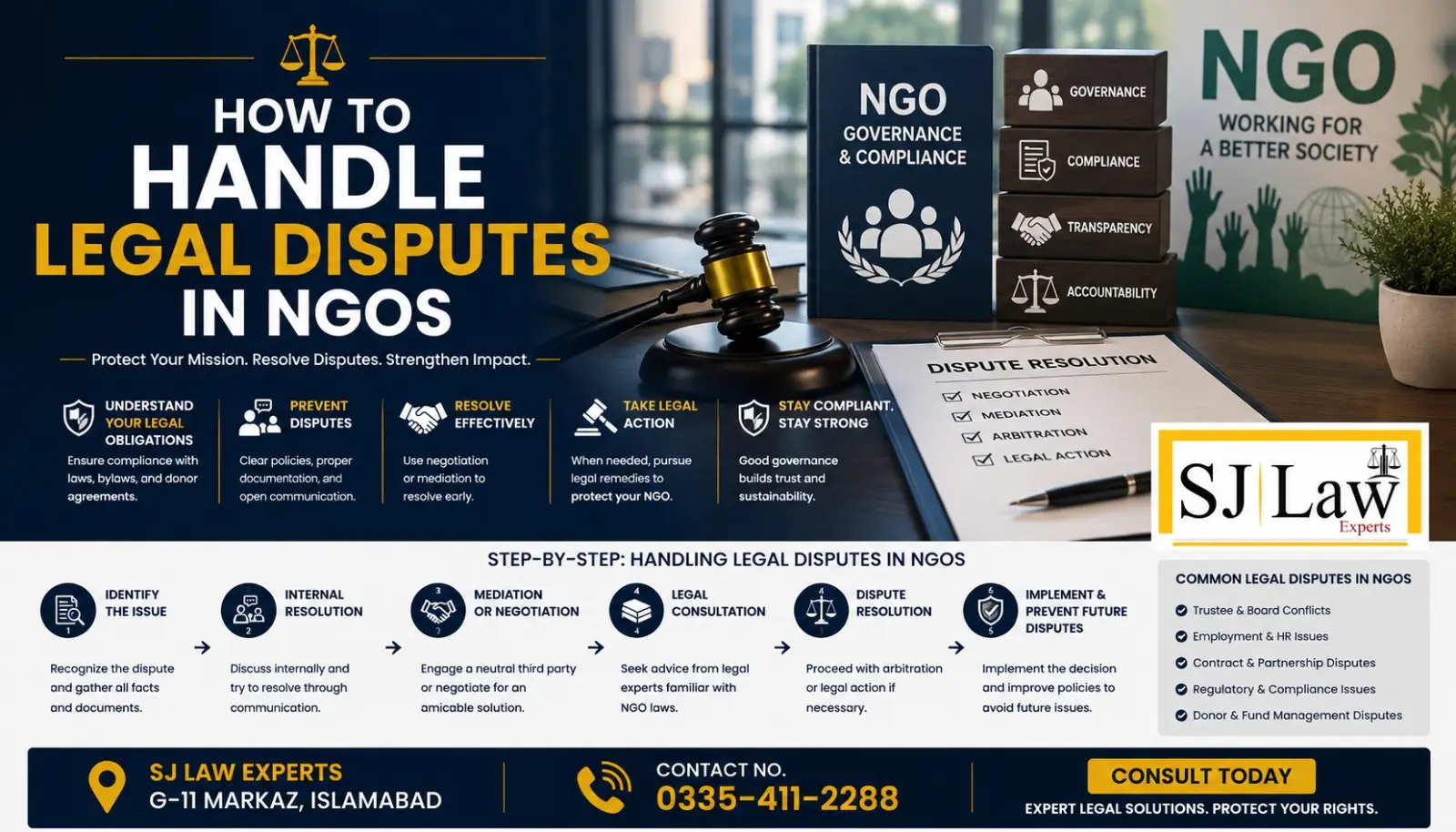
A legal dispute can disrupt years of humanitarian work in a matter of days. Whether it involves governance conflicts, financial disagreements, employment claims, or regulatory compliance issues, understanding how to manage NGO Legal Disputes Pakistan is essential for protecting your organization’s mission, reputation, and long-term sustainability.Non-governmental organizations (NGOs) play a vital role in addressing social, educational, healthcare, and humanitarian challenges throughout Pakistan. While these organizations are established with noble objectives, they are not immune to internal conflicts and legal challenges. Disputes among board members, disagreements regarding financial management, employee grievances, donor-related conflicts, and regulatory compliance issues can significantly impact an NGO’s operations.
At SJ Law Experts, we regularly assist NGOs, nonprofit organizations, trustees, directors, and stakeholders in navigating complex legal disputes while ensuring compliance with Pakistani laws governing nonprofit entities. Understanding the root causes of disputes and implementing effective governance practices can help organizations minimize risks and focus on achieving their social objectives.
Understanding Legal Disputes in NGOs
Legal disputes within NGOs can arise from a wide range of circumstances. Unlike commercial businesses that primarily focus on profit generation, NGOs operate within a framework of public accountability, donor expectations, and regulatory oversight. This unique structure often creates challenges that require careful legal management. Disputes may involve disagreements among board members regarding strategic decisions, allegations of financial mismanagement, conflicts between management and employees, breaches of donor agreements, or non-compliance with regulatory requirements. In many cases, the dispute begins as an internal disagreement but escalates into a legal matter due to poor communication or the absence of proper governance procedures.
Organizations that fail to establish clear policies and accountability mechanisms are generally more vulnerable to legal conflicts. Therefore, understanding the legal framework governing NGOs is the first step toward effective dispute prevention and resolution.
Common Causes of NGO Legal Disputes in Pakistan
Board and Governance Conflicts
One of the most common forms of NGO Legal Disputes Pakistan involves disagreements among board members or trustees. These disputes often arise due to differences in organizational vision, decision-making authority, leadership appointments, or financial oversight responsibilities. When governance structures are unclear, conflicts can quickly escalate. Board members may challenge resolutions, question leadership decisions, or raise concerns regarding transparency. Establishing clear bylaws and governance policies is essential for reducing such risks.
Financial Mismanagement Allegations
Financial accountability is a critical component of NGO operations. Allegations involving misuse of funds, unauthorized expenditures, inaccurate reporting, or lack of financial transparency can lead to serious legal consequences. Donors, regulatory authorities, and stakeholders expect NGOs to maintain proper financial records and comply with reporting requirements. Any perceived irregularity may trigger investigations, audits, or legal proceedings.
Employment and Workplace Disputes
Like any other organization, NGOs must comply with labor and employment laws. Disputes related to wrongful termination, workplace harassment, discrimination, salary issues, or contractual disagreements can result in litigation and reputational damage. Implementing clear employment policies and maintaining proper documentation can significantly reduce the likelihood of employment-related disputes.
Donor and Funding Disagreements
Many NGOs rely on grants and donations to fund their activities. Disputes may arise when funding conditions are misunderstood, reporting obligations are not fulfilled, or project objectives differ from donor expectations. Clear contractual agreements and transparent communication with donors are essential for maintaining positive relationships and avoiding legal conflicts.
NGO Governance Issues and Their Legal Impact
Effective governance serves as the foundation of every successful NGO. Unfortunately, many organizations overlook governance responsibilities until a dispute arises. NGO governance issues often include inadequate oversight, unclear decision-making processes, conflicts of interest, lack of accountability, and poor record-keeping practices. Weak governance structures increase legal exposure and create opportunities for internal disagreements. Regulatory authorities may also scrutinize organizations that fail to demonstrate transparency and accountability. Strong governance requires clearly defined roles, documented procedures, regular board meetings, conflict-of-interest policies, and compliance monitoring systems. These measures help organizations maintain legal compliance while promoting stakeholder confidence.
Legal Framework Governing NGOs in Pakistan
NGOs in Pakistan operate under various legal frameworks depending on their registration structure. These may include trusts, societies, nonprofit companies, and welfare organizations. Each framework carries specific legal obligations related to governance, financial reporting, and regulatory compliance. Organizations must ensure that they comply with registration requirements, annual filings, taxation obligations, employment laws, and applicable sector-specific regulations. Failure to meet these requirements can result in penalties, suspension of operations, or legal action. Seeking professional legal advice is often necessary to ensure ongoing compliance and avoid disputes arising from regulatory violations.
Effective Strategies for Resolving Nonprofit Disputes
Internal Resolution Mechanisms
The most cost-effective approach to resolving Nonprofit disputes is through internal dispute resolution procedures. Organizations should establish formal grievance mechanisms that allow concerns to be addressed before they escalate. Open communication, mediation, and collaborative problem-solving often produce faster and more sustainable outcomes than litigation.
Mediation and Alternative Dispute Resolution
Mediation provides an opportunity for disputing parties to reach mutually acceptable solutions with the assistance of an impartial third party. This process helps preserve organizational relationships while minimizing legal costs and operational disruptions. Many NGO disputes can be successfully resolved through mediation without requiring court intervention.
Legal Representation and Litigation
In situations where negotiations and mediation fail, legal proceedings may become necessary. Litigation should generally be considered a last resort due to the associated costs, time commitments, and reputational risks. Professional legal representation ensures that the organization’s interests are protected throughout the dispute resolution process.
Best Practices to Prevent NGO Legal Disputes
Preventing disputes is always more effective than resolving them after they arise. NGOs should adopt proactive measures such as:
- Establishing clear governance policies.
- Maintaining accurate financial records.
- Conducting regular compliance reviews.
- Implementing conflict-of-interest procedures.
- Providing staff training on legal obligations.
- Documenting board decisions and organizational activities.
- Seeking legal advice when complex issues arise.
Organizations that prioritize compliance and transparency are significantly less likely to experience major legal disputes.
Why Legal Guidance Matters for NGOs
Legal issues can threaten an NGO’s ability to achieve its mission and serve its beneficiaries. Professional legal guidance helps organizations identify risks, strengthen governance practices, maintain compliance, and resolve disputes efficiently. At SJ Law Experts, we understand the unique challenges facing nonprofit organizations in Pakistan. Our legal team assists NGOs with governance matters, compliance reviews, dispute resolution, employment issues, regulatory requirements, and litigation support. By addressing legal concerns proactively, NGOs can focus on delivering meaningful social impact while safeguarding their operations.
Conclusion
Managing NGO Legal Disputes Pakistan requires a combination of strong governance, legal compliance, transparent leadership, and effective conflict resolution strategies. From boardroom disagreements and financial concerns to employment matters and donor conflicts, NGOs face a variety of legal challenges that can impact their success.
Organizations that invest in robust governance frameworks and seek timely legal guidance are better positioned to prevent disputes and protect their mission. By addressing NGO governance issues and resolving Nonprofit disputes professionally, NGOs can continue serving communities while maintaining public trust and regulatory compliance.
1. What are NGO legal disputes in Pakistan?
They include governance, financial, employment, and regulatory conflicts within NGOs.
2. What causes NGO governance issues?
Poor leadership, unclear bylaws, and lack of transparency are common causes.
3. Can nonprofit disputes be settled without court?
Yes, many disputes are resolved through mediation or negotiation.
4. Why is legal compliance important for NGOs?
It helps avoid penalties, disputes, and regulatory issues.
5. When should an NGO hire a lawyer?
When facing legal disputes, compliance concerns, or governance challenges.
