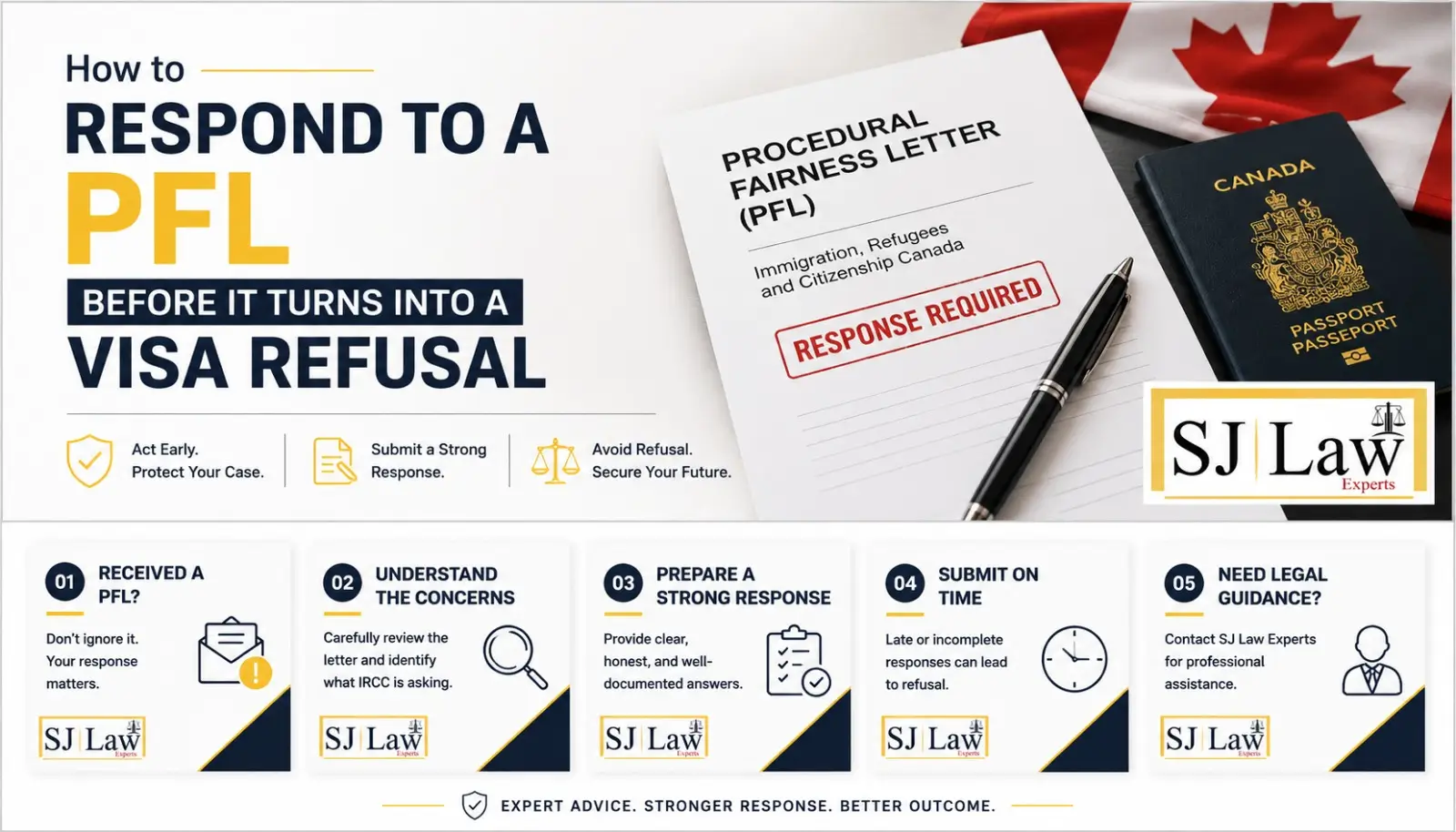
A Procedural Fairness Letter (PFL) from Immigration, Refugees and Citizenship Canada (IRCC) is one of the most critical notices an applicant can receive. It does not mean your application has been refused. Instead, it means the visa officer has identified concerns that could lead to refusal and is giving you an opportunity to respond before a final decision is made. According to recent immigration guidance, a PFL is often considered the applicant’s last chance to address concerns before a refusal is issued.
For applicants hoping to avoid visa refusal Canada, understanding how to prepare an effective response is essential. A well-structured reply supported by credible evidence can often resolve the officer’s concerns and improve the chances of a positive outcome. On the other hand, a weak, emotional, or incomplete response can strengthen the officer’s doubts and result in refusal.
What Is a PFL?
A Procedural Fairness Letter is a formal communication from IRCC informing an applicant that concerns have been identified in their immigration application. The officer reviewing the file believes there may be an issue related to eligibility, admissibility, credibility, or documentation. Before making a final decision, IRCC provides the applicant with an opportunity to explain or submit additional evidence. This process reflects Canada’s legal requirement to provide procedural fairness in administrative decision-making.
Many applicants panic when they receive a PFL because the language used in these letters can sound serious and intimidating. While the concern is legitimate, it is important to remember that a PFL is not a refusal. Think of it as a warning signal. The officer is effectively saying, “I have concerns about your application, and I need more information before making a decision.” This distinction matters because it means there is still an opportunity to resolve the issue and avoid visa refusal Canada.
Why IRCC Issues a PFL
IRCC issues PFLs when officers identify information that appears inconsistent, incomplete, misleading, or unsupported by evidence. The goal is not to punish applicants but to ensure decisions are fair and based on complete information. Common triggers include discrepancies in employment records, unexplained financial transactions, questions about relationship authenticity, or concerns regarding misrepresentation.
Officers are trained to assess credibility. When information does not align across forms, supporting documents, interviews, or background checks, a PFL may be issued. In many cases, the issue is not intentional wrongdoing but poor documentation or misunderstanding. Responding properly can often clarify the situation and restore confidence in the application.
Why a PFL Should Never Be Ignored
Risks of Non-Response
Ignoring a PFL is one of the worst decisions an applicant can make. If no response is submitted, IRCC will proceed with the information already available in the file. Since the officer has already identified concerns, the absence of a response usually means those concerns remain unresolved. As a result, refusal becomes highly likely.
Many applicants mistakenly assume that silence may avoid drawing further attention to the issue. The opposite is true. A failure to respond can be interpreted as an inability to provide a reasonable explanation or supporting evidence. Immigration officers are required to make decisions based on the available record, and an unanswered PFL leaves only the negative information for consideration.
Potential Long-Term Consequences
The consequences of ignoring a PFL can extend beyond a single refusal. If the issue involves alleged misrepresentation, the stakes become significantly higher. Misrepresentation findings can result in application refusal and a ban from submitting certain Canadian immigration applications for several years.
Future applications may also be affected because immigration records are retained. A history of unresolved concerns can create additional scrutiny in subsequent submissions. This is why every applicant should take a PFL seriously and develop a strong PFL Response Canada strategy immediately after receiving the notice.
Common Reasons Applicants Receive a PFL
Misrepresentation Concerns
Misrepresentation remains one of the most common reasons for a Procedural Fairness Letter. This occurs when an officer believes information may have been omitted, altered, or inaccurately presented. Sometimes the issue involves fake documents, while in other situations it results from simple mistakes or misunderstandings.
Employment Verification Issues
Employment claims are carefully reviewed by IRCC, particularly in economic immigration programs. Officers may question job duties, work experience duration, salary records, or employer legitimacy. If employment evidence does not clearly support the claimed occupation, a PFL may follow.
Financial Documentation Problems
Proof of funds is another frequent area of concern. Unexplained deposits, inconsistent bank statements, or unclear sources of income can raise red flags. Officers need assurance that funds are legitimate, available, and genuinely belong to the applicant.
Relationship Genuineness Questions
Family sponsorship applicants sometimes receive PFLs regarding the authenticity of their relationship. Significant age gaps, inconsistent interview responses, limited communication records, or insufficient evidence of shared life can trigger concerns.
First Steps After Receiving a PFL
Read Every Detail Carefully
The first step is simple but crucial. Read the letter multiple times. Every concern identified by the officer should be highlighted and understood completely. Avoid assumptions. Respond only to the issues specifically mentioned in the letter. Many applicants rush into preparing a response without fully understanding the officer’s concerns. This often results in irrelevant submissions that fail to address the actual issue. A careful review ensures your response is targeted and effective.
Understand the Deadline
PFLs come with strict deadlines. Missing the deadline can severely damage your case. Applicants should begin gathering evidence immediately and, if necessary, seek professional guidance as soon as possible. Creating a timeline for document collection, drafting explanations, and final submission can help ensure nothing is overlooked. Time management is a critical part of any successful IRCC PFL response strategy.
Building an Effective PFL Response Canada
Address Every Concern Individually
One of the most effective approaches is to respond to each concern separately. If the officer raises three issues, provide three distinct explanations supported by relevant evidence. This structured method makes it easier for the officer to review and evaluate your response.
Gather Strong Supporting Evidence
Evidence is the foundation of a successful response. Statements alone are rarely enough. Documents such as employment records, tax returns, bank statements, affidavits, contracts, educational credentials, and communication logs may all be relevant depending on the issue. Consider the evidence as pieces of a puzzle. Each document should help complete the picture and eliminate uncertainty. The stronger the documentation, the easier it becomes for the officer to reassess the concern.
Draft a Professional Explanation Letter
A detailed Letter of Explanation is often the centerpiece of a strong PFL response.
Structure of a Winning Response
| Section | Purpose |
| Introduction | Identify application and acknowledge concerns |
| Issue Summary | List each concern raised by IRCC |
| Explanation | Provide factual responses point by point |
| Evidence References | Link each explanation to supporting documents |
| Closing Statement | Politely request reconsideration based on evidence |
This structure creates clarity and professionalism. Officers review large volumes of files, so organization can make a significant difference.
Common Writing Mistakes to Avoid
Applicants frequently make several avoidable mistakes:
- Emotional arguments without evidence
- Long narratives unrelated to the issue
- Contradictory explanations
- Submission of irrelevant documents
- Aggressive or defensive language
A professional tone focused on facts is always more effective than emotional appeals.
IRCC PFL Response Strategy That Works
- Focus on Facts, Not Emotions: Immigration decisions are evidence-based. While receiving a PFL can be stressful, emotional responses rarely help. Officers need facts, documentation, and clear explanations. A calm and objective approach demonstrates credibility and professionalism.
- Organize Documents Properly: Proper organization improves readability and efficiency. Label documents clearly, create an index, and reference exhibits directly in your explanation letter. This allows the officer to verify claims quickly and reduces confusion.
- Demonstrate Credibility: Credibility is often the deciding factor in immigration cases. Every statement should be truthful, verifiable, and consistent with the original application. Even minor inconsistencies can undermine trust and create additional concerns.
When Professional Help Becomes Necessary
- Complex Misrepresentation Cases: Cases involving alleged misrepresentation require special attention. The consequences can be severe, including refusal and future inadmissibility. When the PFL references misrepresentation, consulting an experienced immigration professional is often advisable.
- Legal Representation Benefits: Immigration lawyers and regulated consultants understand how officers evaluate evidence. They can identify weaknesses, strengthen arguments, and ensure submissions comply with legal requirements. Professional representation may be particularly valuable when significant immigration opportunities are at risk.
Best Practices to Avoid Future PFLs
The best way to avoid visa refusal Canada is to prevent concerns from arising in the first place. Applicants should:
- Ensure all forms are accurate and consistent.
- Verify that supporting documents match application details.
- Explain unusual circumstances proactively.
- Maintain complete records of employment, education, and finances.
- Review applications thoroughly before submission.
A well-prepared application reduces uncertainty and helps officers make decisions with confidence.
Conclusion
A Procedural Fairness Letter should never be viewed as the end of an immigration journey. It is an opportunity to correct misunderstandings, provide additional evidence, and demonstrate credibility. Applicants who respond quickly, address concerns directly, and support their explanations with strong documentation significantly improve their chances of success. The key to avoid visa refusal Canada lies in preparation, organization, and accuracy. Whether dealing with employment concerns, proof of funds issues, relationship questions, or allegations of misrepresentation, a strategic and evidence-based response can make the difference between approval and refusal. By following a structured PFL Response Canada approach and implementing an effective IRCC PFL response strategy, applicants can protect their immigration goals and move forward with greater confidence.
1. Does receiving a PFL mean my Canadian visa is refused?
No. A PFL is not a refusal. It is an opportunity to address concerns before IRCC makes a final decision.
2. How much time do I have to respond to a PFL?
The deadline varies depending on the case. Always follow the timeline mentioned in the letter and act immediately.
3. Can I submit additional documents with my PFL response?
Yes. Supporting documents are often essential and should directly address the officer’s concerns.
4. What happens if I ignore a Procedural Fairness Letter?
Ignoring a PFL usually results in refusal because the concerns remain unanswered.
5. Should I hire an immigration lawyer for a PFL?
For serious concerns, especially misrepresentation allegations, professional legal assistance can significantly strengthen your response.