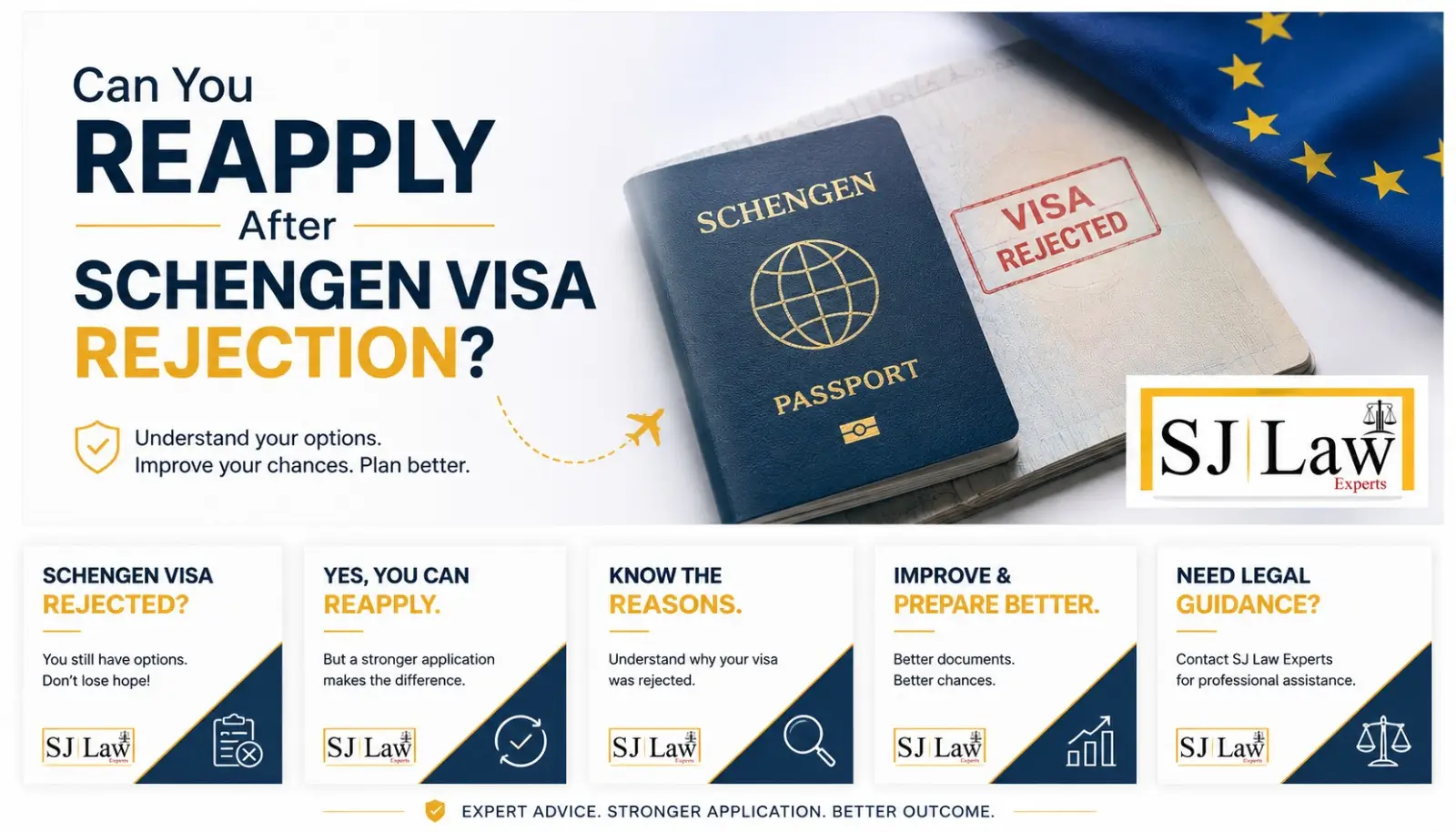
A Schengen Visa Rejection can be disappointing and stressful, especially when travel plans involve family visits, tourism, education, or business purposes. However, a refusal does not always mean the end of your travel journey. Many applicants successfully secure approval after understanding the refusal reasons and preparing a stronger second application.
This guide explains whether you can reapply after a visa refusal, common rejection grounds, and the best rejection solution strategies to improve your chances during a Schengen visa second attempt.
Understanding Schengen Visa Rejection
A Schengen Visa Rejection occurs when embassy or consular authorities determine that an applicant does not meet visa requirements under the Schengen Visa Code. The refusal letter usually mentions the legal reason for denial.
Common refusal categories include:
- Insufficient financial proof
- Weak travel history
- Incomplete documents
- Unclear travel purpose
- Lack of accommodation proof
- Suspicion of overstaying
- Weak ties to the home country
- Travel insurance issues
Understanding the exact refusal ground is the first step toward a successful Reapply Schengen Visa strategy.
Can You Reapply After Schengen Visa Rejection?
Yes. In most cases, you can Reapply Schengen Visa after refusal. There is generally no mandatory waiting period unless specifically imposed by the embassy. However, simply filing the same documents again rarely works. Your second application should address the concerns mentioned in the refusal notice. A Schengen visa second attempt should be stronger, better documented, and legally supported where necessary.
Is Appeal Better or Reapplication?
After a Schengen Visa Rejection, applicants usually have two options:
Appeal the Decision
Some Schengen countries allow an appeal against refusal. This process involves challenging the embassy’s decision through legal or administrative procedures.
Appeal may be suitable when:
- The refusal is clearly unfair
- Documents were ignored
- Embassy misunderstood facts
- Administrative mistakes occurred
Submit a New Application
Many applicants prefer to Reapply Schengen Visa after correcting deficiencies.
Reapplication is often faster when:
- Missing documents caused refusal
- Financial proof was weak
- Purpose of travel lacked clarity
- Supporting evidence can be improved
The correct option depends on refusal reasons and country-specific rules.
Common Reasons Behind Schengen Visa Rejection
Understanding refusal patterns helps applicants prepare stronger applications.
1. Insufficient Financial Evidence
Embassies must be satisfied that applicants can support themselves during travel.
Problems include:
- Low bank balance
- Sudden cash deposits
- Unverified income
- Weak sponsorship evidence
Financial documents should demonstrate stability and genuine income sources.
2. Weak Travel Purpose
A vague travel plan often leads to Schengen Visa Rejection.
Applicants should provide:
- Detailed itinerary
- Hotel bookings
- Invitation letters where relevant
- Return travel proof
The embassy must understand why you intend to travel.
3. Lack of Strong Home Ties
Visa officers evaluate whether applicants are likely to return.
Strong ties may include:
- Employment
- Business ownership
- Family responsibilities
- Property ownership
- Educational commitments
Weak ties can create overstay concerns.
4. Documentation Problems
Incomplete or inconsistent paperwork remains one of the leading refusal causes.
Examples include:
- Missing forms
- Expired passports
- Incorrect translations
- Unverified certificates
- Inconsistent information
Accuracy matters during every Schengen visa second attempt.
How to Reapply Schengen Visa Successfully
A successful reapplication requires more than repeating the original file.
Step 1: Review the Refusal Letter Carefully
Do not ignore refusal codes or embassy observations.
Identify:
- Legal refusal ground
- Missing evidence
- Weak arguments
- Documentation gaps
The refusal letter acts as a roadmap for improvement.
Step 2: Fix Previous Weaknesses
The strongest rejection solution is addressing embassy concerns directly.
For example:
- Improve bank statements
- Add employment proof
- Clarify travel plans
- Strengthen sponsorship evidence
- Submit better supporting documents
Avoid submitting identical paperwork.
Step 3: Prepare a Strong Cover Letter
A cover letter can significantly improve clarity.
It should explain:
- Purpose of travel
- Previous refusal context
- Improvements made
- Supporting evidence submitted
A professionally drafted explanation often strengthens credibility.
Step 4: Submit Complete and Organized Documentation
Embassy officers review large volumes of files. A well-organized application helps.
Recommended order:
- Visa application form
- Passport copies
- Refusal letter copy
- Financial evidence
- Employment documents
- Travel itinerary
- Accommodation proof
- Insurance
- Supporting letters
Professional presentation matters.
Schengen Visa Second Attempt from Pakistan
Pakistani applicants often face additional scrutiny due to immigration concerns and document verification standards. For applicants in Pakistan, a Schengen visa second attempt should include:
Strong Financial Documentation
Provide:
- Six-month bank statements
- Salary slips
- Tax records
- Business registration if applicable
Avoid unexplained transactions.
Employment and Business Proof
Working professionals should provide:
- Employment letter
- Leave approval
- Salary confirmation
Business owners may include:
- Registration certificates
- Tax filings
- Business activity evidence
Genuine Travel History
Previous lawful travel strengthens credibility. If you lack travel history, compensate with strong financial and family ties.
What Not to Do After Schengen Visa Rejection
Many second applications fail due to repeated mistakes. Avoid:
- Reapplying Immediately Without Changes: Submitting the same documents rarely changes embassy decisions.
- Using False Documents: Fraud or forged records can lead to bans and serious immigration consequences.
- Hiding Previous Refusal: Always disclose earlier refusals when required. Transparency improves credibility.
How Long Should You Wait Before Reapplying?
There is no universal waiting period after Schengen Visa Rejection.
You may reapply once:
- Missing documents are corrected
- Finances improve
- Travel purpose becomes clearer
- Application weaknesses are resolved
Rushing without improvement can lead to repeated refusal.
How Legal Guidance Can Help
Complex refusal cases may benefit from legal or immigration guidance. Professional assistance may help:
- Analyze refusal reasons
- Draft appeal or cover letter
- Review documents
- Identify legal weaknesses
- Build stronger reapplication files
This becomes especially useful for repeated refusals.
How SJ Law Experts Helps
At SJ Law Experts, we understand how stressful a Schengen Visa Rejection can be for Pakistani applicants. Our legal and immigration support focuses on reviewing refusal grounds, preparing supporting documents, drafting professional cover letters, and advising on the most effective rejection solution strategy. Whether you wish to Reapply Schengen Visa or evaluate appeal options, proper preparation can improve the strength and credibility of your case.
Final Thoughts
A Schengen Visa Rejection is not necessarily the end of your travel plans. Many applicants succeed after understanding refusal grounds and preparing stronger applications. The key to a successful Schengen visa second attempt lies in identifying weaknesses, improving documentation, and adopting a practical rejection solution rather than repeating earlier mistakes. With careful planning and professional guidance where necessary, reapplication can become a realistic pathway toward approval.
Can I reapply immediately after Schengen visa refusal?
Yes, if you have corrected the issues that caused refusal.
Does Schengen visa rejection affect future applications?
A refusal does not permanently block future visas, but repeated refusals may affect credibility.
Is appeal better than reapplication?
It depends on refusal reasons. Administrative errors may justify appeal, while document deficiencies often favor reapplication.
Can I apply through another Schengen country after refusal?
Yes, but only if that country is genuinely your primary destination. Embassy shopping may raise concerns.