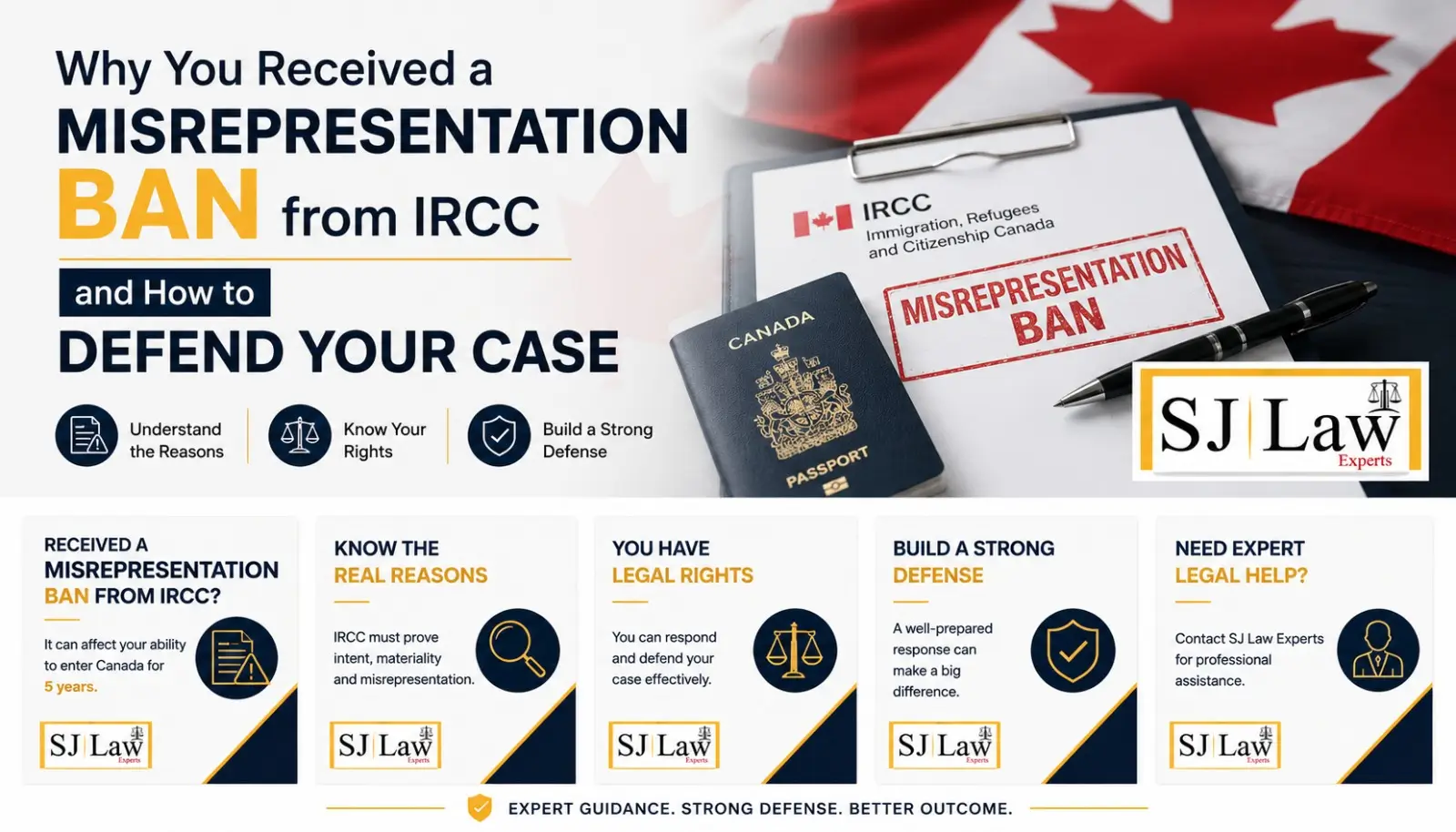
Receiving a refusal from Canadian immigration authorities is stressful. However, receiving a Misrepresentation Ban Canada decision can be even more serious because it may prevent you from entering Canada for several years. Many applicants from Islamabad and across Pakistan are shocked when they receive a notice claiming they provided incorrect, incomplete, or misleading information in their immigration application. The good news is that a finding of misrepresentation does not always mean your immigration journey is over. In many situations, applicants can respond to allegations, challenge incorrect findings, and present evidence to protect their future immigration opportunities. This guide explains why a Misrepresentation Ban Canada may be issued, how the process works, possible defenses, and how legal assistance can help you respond effectively.
Understanding a Misrepresentation Ban Canada
A Misrepresentation Ban Canada is a penalty imposed when Canadian immigration authorities determine that an applicant provided false information, withheld important facts, or submitted misleading documents during an immigration process. Under Canadian immigration laws, even an unintentional mistake can sometimes trigger concerns about credibility. As a result, immigration officers carefully review applications to ensure all information is truthful and complete.
Common applications affected include:
- Visitor visas
- Study permits
- Work permits
- Permanent residence applications
- Family sponsorship applications
- Citizenship applications
When a finding is made, applicants may face a refusal and additional immigration consequences.
What Is IRCC Misrepresentation?
IRCC misrepresentation occurs when an applicant directly or indirectly provides information that could influence an immigration officer’s decision.
Examples include:
- Submitting fake educational documents
- Providing incorrect employment history
- Hiding previous visa refusals
- Failing to disclose family members
- Using altered bank statements
- Providing inaccurate travel history
In many cases, applicants are unaware that information submitted by consultants, agents, or third parties can also create IRCC misrepresentation concerns.
Common Reasons People Receive a Misrepresentation Ban Canada
1. False Documents
One of the most common reasons for a Misrepresentation Ban Canada is submitting fraudulent documents.
These may include:
- Fake degrees
- Forged employment letters
- Altered financial records
- Counterfeit marriage certificates
Canadian authorities often verify documents directly with issuing institutions.
2. Hidden Visa Refusals
Many applicants fail to disclose previous visa refusals from countries such as:
- United States
- United Kingdom
- Australia
- New Zealand
- Schengen countries
Failure to disclose previous refusals can lead to allegations of IRCC misrepresentation.
3. Incorrect Employment Information
Employment history is closely examined during immigration processing.
Problems arise when applicants:
- Exaggerate job duties
- Inflate work experience
- Provide incorrect job titles
- Submit unverifiable employment records
4. Omitting Family Information
Failing to declare:
- Spouses
- Former spouses
- Children
- Dependents
can create serious immigration complications and may result in a finding of misrepresentation.
5. Information Submitted by Consultants
Many applicants trust immigration agents completely. Unfortunately, if an agent submits inaccurate information, the applicant may still be held responsible. This is why reviewing every document before submission is extremely important.
What Happens After an IRCC Misrepresentation Allegation?
When officers suspect IRCC misrepresentation, they often issue a Procedural Fairness Letter (PFL).
A PFL gives applicants an opportunity to:
- Review the allegations
- Submit explanations
- Provide supporting evidence
- Correct misunderstandings
This stage is critical because the response can significantly affect the final decision. Ignoring a Procedural Fairness Letter can increase the risk of receiving a Misrepresentation Ban Canada decision.
Understanding the Canada Visa Ban 5 Years Consequence
One of the most severe consequences is a Canada visa ban for 5 years. If misrepresentation is established, an applicant may:
- Be refused the current application
- Become inadmissible to Canada
- Face restrictions on future applications
- Experience increased scrutiny in future immigration matters
The Canada visa ban 5 years rule can affect study, work, business, and family immigration plans. For many Pakistani applicants, this can delay important educational and career opportunities.
Can You Defend Yourself Against a Misrepresentation Finding?
Yes. Many applicants successfully challenge allegations when they provide strong evidence and proper legal arguments.
Possible Defenses Include
Honest Mistake: Sometimes errors occur unintentionally.
Examples:
- Translation mistakes
- Typographical errors
- Misunderstood questions
- Administrative errors
Demonstrating good faith may help resolve concerns.
No Material Impact
Not every mistake affects an immigration decision. If the disputed information would not have changed the officer’s assessment, this may become part of a defense strategy.
Third-Party Error
Some applicants rely on consultants, travel agents, or document preparers. Evidence showing that incorrect information originated from another source may support your case.
Lack of Intent
Although intent is not always required under Canadian immigration law, demonstrating that there was no deliberate attempt to deceive may strengthen a response.
How to Respond to a Procedural Fairness Letter
Receiving a PFL should never be ignored.
Step 1: Read the Allegations Carefully
Identify:
- The exact concern
- The documents questioned
- Any information considered inaccurate
Step 2: Gather Supporting Evidence
Collect documents that support your explanation, such as:
- Educational records
- Employment documents
- Tax records
- Communication history
- Official certificates
Step 3: Prepare a Detailed Explanation
Your response should:
- Address each allegation directly
- Provide supporting evidence
- Explain any misunderstandings
- Clarify factual inaccuracies
Step 4: Submit Before the Deadline
Missing deadlines can seriously damage your case.
Why an Immigration Lawyer Pakistan Canada Matters
When facing serious immigration allegations, professional legal guidance can make a significant difference.
An experienced Immigration lawyer Pakistan Canada can:
- Review your immigration file
- Analyze allegations
- Draft responses to Procedural Fairness Letters
- Gather supporting evidence
- Identify legal weaknesses in the officer’s concerns
- Prepare judicial review strategies when necessary
Because immigration law is complex, many applicants choose an Immigration lawyer Pakistan Canada to protect their rights and improve their chances of a positive outcome.
Judicial Review: Another Possible Option
If a final refusal has already been issued, applicants may have the option of seeking a judicial review. A judicial review involves asking the Canadian Federal Court to examine whether the immigration decision was reasonable and legally correct. Judicial review is not a new application. Instead, it focuses on the decision-making process used by immigration authorities. Legal advice should be obtained quickly because strict deadlines often apply.
How to Avoid Future IRCC Misrepresentation Issues
Preventing problems is always better than defending them.
Best Practices
- Review every application carefully.
- Disclose all previous refusals.
- Submit genuine documents only.
- Keep copies of all submissions.
- Verify information prepared by consultants.
- Answer every question honestly.
- Seek professional advice when unsure.
These steps can reduce the likelihood of future IRCC misrepresentation concerns.
How SJ Law Experts Can Help
At SJ Law Experts, we assist Pakistani applicants facing immigration complications involving Canada.
Our legal services include:
- Procedural Fairness Letter responses
- Immigration refusal analysis
- Misrepresentation allegation defense
- Judicial review guidance
- Immigration documentation review
Whether you are dealing with a potential Misrepresentation Ban Canada issue or responding to a complex immigration concern, obtaining timely legal assistance can help protect your future immigration goals.
Final Thoughts
A Misrepresentation Ban Canada can be one of the most challenging immigration issues a person faces. However, receiving an allegation does not automatically mean your case is lost. Understanding the reasons behind the accusation, responding properly to IRCC misrepresentation concerns, and obtaining professional legal guidance can significantly improve your chances of success.
If you have received a Procedural Fairness Letter or are facing a Canada visa ban 5 years consequence, acting quickly is essential. Early intervention, accurate documentation, and experienced legal support can make a meaningful difference in protecting your future opportunities in Canada.
How long does a Misrepresentation Ban Canada last?
In many cases, the inadmissibility period is five years, though the circumstances of each case should be reviewed carefully.
Can I apply again after a Canada visa ban 5 years period?
Yes. Once the inadmissibility period ends, you may become eligible to submit a new immigration application, provided you meet all requirements.
Does every mistake count as IRCC misrepresentation?
No. Some mistakes are minor and may not affect the decision. However, material errors or omissions can create serious concerns.
Can I respond to a Procedural Fairness Letter myself?
Yes, but many applicants seek legal assistance because the response often plays a crucial role in the outcome of the case.
Should I hire an Immigration lawyer Pakistan Canada for my case?
If you have received a Procedural Fairness Letter, refusal, or inadmissibility finding, consulting an Immigration lawyer Pakistan Canada can help you understand your options and prepare a stronger response.