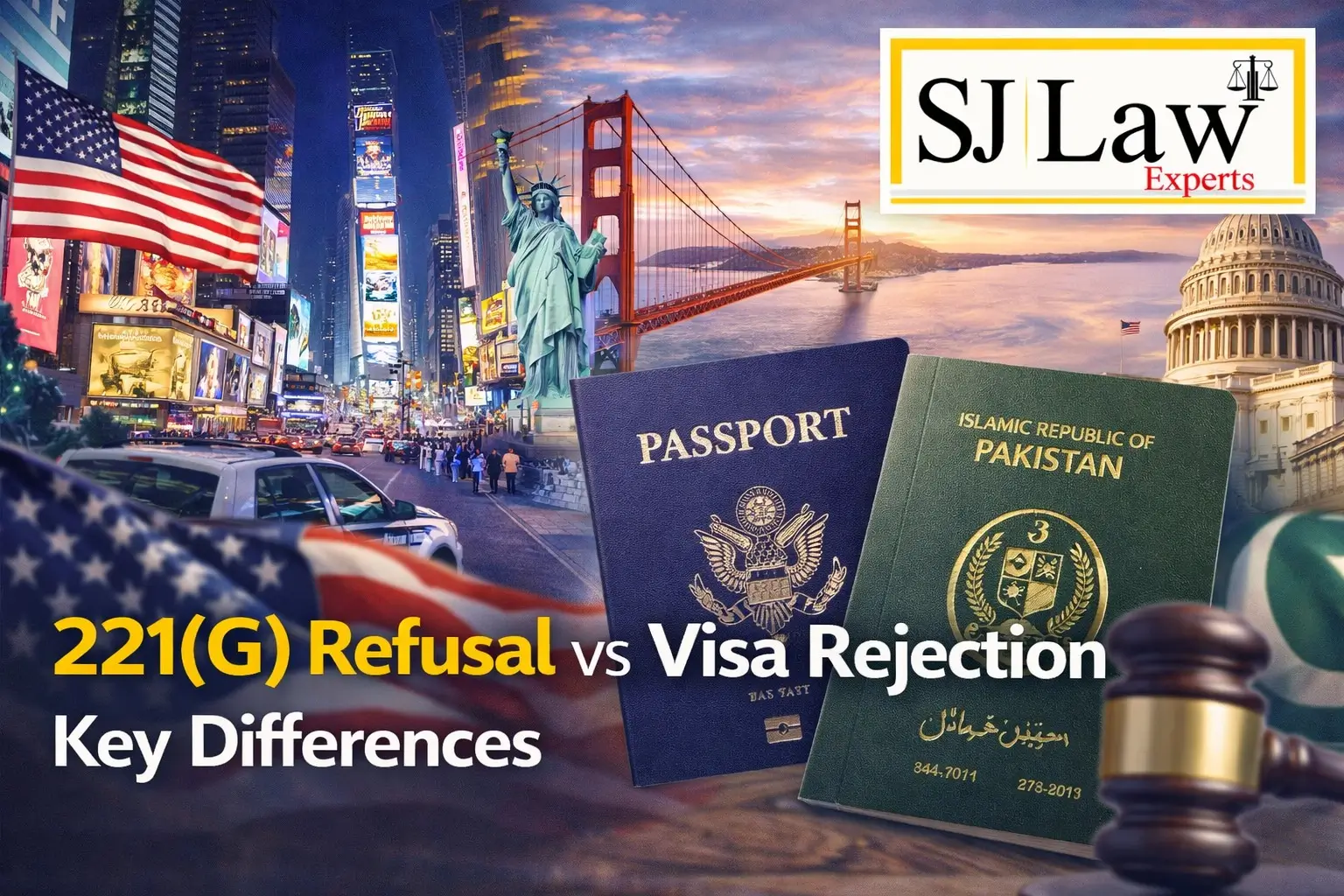
One interview. One decision. But two completely different legal meanings. For many applicants in Pakistan, receiving a 221(g) notice or hearing the word “refused” at the embassy leads to panic. The problem is that not every refusal is a rejection. That difference matters. Understanding 221(g) Refusal vs Visa Rejection Pakistan is critical because one may simply require further processing, while the other can result in a final denial affecting future applications.
Knowing which category your case falls into is the first step toward protecting your visa chances and making the right legal decision.This guide breaks down the legal and procedural differences, explains what each outcome means, and outlines the best strategy for protecting your immigration future. At SJ Law Experts, we help applicants in Pakistan understand complex visa issues and take the right legal steps with clarity and confidence.
Why This Difference Matters for Pakistan Applicants
Many Pakistani applicants mistakenly believe every refusal is a rejection. That misunderstanding can lead to poor decisions such as unnecessary reapplications, missed deadlines, or incomplete responses.
The truth is:
- 221(g) refusal usually means temporary administrative processing or document deficiency
- Visa rejection often means final denial under another legal section
Knowing which one applies to your case determines your next legal step.
What Is a 221(g) Refusal?
A 221(g) refusal occurs when the consular officer cannot issue a visa immediately because more information or review is required. This is governed under Section 221(g) of the U.S. Immigration and Nationality Act.
It is commonly issued when:
- additional documents are needed
- security checks are pending
- administrative processing is required
- background verification is incomplete
This is why 221g Administrative Processing Pakistan Explained is such an important topic for applicants. A 221(g) refusal is usually temporary. It does not automatically mean the visa is denied permanently.
What Is a Visa Rejection?
A visa rejection refers to a final refusal under legal provisions such as:
- 214(b) – failure to prove non-immigrant intent
- 212(a) – inadmissibility grounds
- fraud or misrepresentation findings
- criminal or security concerns
Unlike 221(g), these refusals often require stronger legal remedies or reapplication strategies. A rejection can directly affect future visa eligibility.
221(g) Refusal vs Visa Rejection Pakistan
Understanding 221(g) Refusal vs Visa Rejection Pakistan requires comparing their legal nature.
| Factor | 221(g) Refusal | Visa Rejection |
| Nature | Temporary procedural refusal | Final legal denial |
| Cause | Missing info / admin review | Eligibility failure |
| Outcome | Pending further action | Application closed |
| Can it be resolved? | Often yes | Depends on grounds |
| Reapply needed? | Usually no | Often yes |
| Timeline | Weeks to months | Immediate closure |
This distinction is crucial for choosing the correct response.
Difference Between 221g and Visa Refusal USA Pakistan
The Difference Between 221g and Visa Refusal USA Pakistan lies in intent and legal effect. A 221(g) notice signals that the embassy needs more time or documents before deciding. A true visa refusal indicates the officer has already determined the applicant does not qualify.
In simple terms:
- 221(g) = incomplete decision
- rejection = completed denial
That difference shapes your legal options.
Common US Visa Rejection Reasons Pakistan 221g vs Refusal
Many applicants confuse administrative processing with refusal because both may appear as “refused” on status systems.
However, the reasons differ.
Common 221(g) Triggers:
- missing employment verification
- educational credential review
- technology alert list screening
- incomplete financial evidence
Common Rejection Grounds:
- weak ties to Pakistan
- insufficient financial capability
- inconsistent statements
- prior immigration violations
- suspected immigrant intent
Recognizing these patterns helps applicants assess risk.
How Long Does 221(g) Administrative Processing Take?
For Pakistani applicants, processing time varies.
Typical timelines:
- simple document checks: 2–4 weeks
- security clearance: 1–3 months
- complex reviews: 6 months or longer
This uncertainty often creates stress, but patience is essential. A delayed case is not necessarily a denied case.
What Should Applicants Do After Receiving 221(g)?
Immediate action matters.
Best steps include:
- read the notice carefully
- submit requested documents promptly
- avoid duplicate submissions
- track status regularly
- seek legal advice if delays exceed expected timelines
Proper compliance can strengthen outcomes.
When Should You Seek Legal Help?
Legal intervention is valuable when:
- your case remains pending for over 90 days
- repeated document requests occur
- the refusal basis is unclear
- prior visa denials exist
- complex immigration history is involved
A 221g Refusal Lawyer Pakistan Immigration Help service can identify the best strategy.
How SJ Law Experts Assists Pakistan Applicants
At SJ Law Experts, we provide:
- refusal notice analysis
- document preparation
- embassy response strategy
- legal advisory on reapplication
- administrative processing case review
Our goal is to reduce uncertainty and improve legal readiness.
Common Mistakes to Avoid
Applicants often worsen their position by:
- panicking and reapplying immediately
- ignoring embassy instructions
- submitting irrelevant documents
- relying solely on online forums
- misunderstanding refusal categories
Each visa issue requires a tailored legal response.
Final Thoughts
For Pakistani applicants, understanding 221(g) Refusal vs Visa Rejection Pakistan can prevent costly mistakes and improve long-term immigration success. A 221(g) notice often represents delay, not defeat. A rejection, however, requires deeper legal evaluation. Knowing the difference allows applicants to respond strategically instead of emotionally. If your visa case is delayed, refused, or uncertain, professional legal guidance can provide clarity and direction. With support from SJ Law Experts, applicants can navigate U.S. visa challenges with confidence and informed legal strategy.
FAQs
Is a 221(g) refusal a permanent rejection?
No. It is usually temporary pending further review.
Can a 221(g) case become approved?
Yes. Many applicants receive visas after administrative processing.
Does a rejection affect future applications?
Yes. Prior refusals can influence future decisions.
Should I reapply after 221(g)?
Usually not unless specifically advised.
Can SJ Law Experts help with visa refusals?
Yes. SJ Law Experts provides legal support for U.S. visa refusal and administrative processing cases.