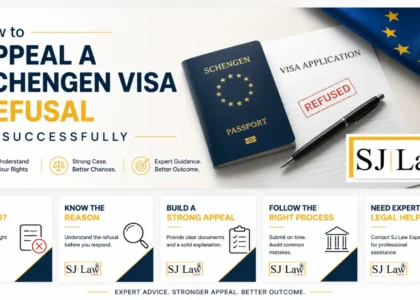
Getting a Schengen visa refusal can feel like the door to Europe just slammed shut in your face. You planned the trip, arranged documents, booked flights, maybe even told your friends. Then suddenly—refused. But here’s the truth most people don’t realize: a refusal is not always the end of the road. In many cases, you have the legal right to challenge that decision through a visa refusal appeal.
If you’re considering a Schengen visa appeal Pakistan, this guide will walk you through the process, your rights, timelines, and how SJ Law Experts can help you move forward with confidence.
Understanding Schengen Visa Refusal
Before talking about appeals, let’s understand what a refusal really means. A Schengen visa allows entry into 27 European countries under one unified visa system governed by the European Union. Each embassy evaluates applications independently but under shared Schengen rules.
When your visa is refused, you’ll receive:
- A refusal letter
- A checklist with marked reasons
- Information about your right to appeal
This letter is your starting point for a visa refusal appeal.
Common Reasons for Schengen Visa Refusal
Most refusals fall into a few common categories:
1. Insufficient Financial Proof: If the embassy believes you cannot financially support your trip, your application may be refused.
2. Doubts About Return Intent: If the visa officer suspects you might overstay or not return to Pakistan, refusal is likely.
3. Incomplete Documentation: Missing bank statements, travel insurance, or invitation letters can result in rejection.
4. Travel History Concerns: Limited or inconsistent travel history can raise red flags.
5. Fake or Misleading Information: Any sign of incorrect or false documentation can lead to serious refusal—and even future bans. Understanding the exact reason is critical before filing a Schengen visa appeal Pakistan.
What Is a Visa Refusal Appeal?
A visa refusal appeal is a formal legal challenge against the embassy’s decision. It asks the embassy or relevant authority to reconsider your application. Think of it like asking for a second review—but this time, with stronger evidence and clearer explanations. It is not the same as reapplying. An appeal directly challenges the previous decision.
Can You File a Schengen Visa Appeal from Pakistan?
Yes. Applicants in Pakistan have the right to file a Schengen visa appeal in Pakistan if the refusal letter states that appeal is permitted.
However, the appeal process depends on:
- The specific country that refused your visa
- Their national immigration laws
- Their appeal deadlines
For example, appealing a Germany refusal is different from appealing a France refusal.
Time Limit for Filing a Visa Refusal Appeal
Time is critical. Most Schengen countries allow:
- 15 to 30 days from the date of refusal
Missing the deadline can result in losing your right to appeal. That’s why immediate action is essential.
Step-by-Step: Schengen Visa Appeal Pakistan Process
Let’s break down the process clearly.
Step 1: Carefully Review the Refusal Letter
The refusal letter outlines:
- The legal grounds for refusal
- The deadline to appeal
- The address for submission
Understanding the exact reason is the foundation of a strong visa refusal appeal.
Step 2: Gather Supporting Evidence
This is where many people fail. You must address the refusal reason directly. For example:
- If finances were weak → provide stronger bank statements.
- If return intent was questioned → submit employment letters, property documents, or family ties evidence.
- If documents were unclear → provide corrected, certified versions.
Your appeal must fix the original weakness.
Step 3: Draft a Strong Appeal Letter
The appeal letter should:
- Be professional and structured
- Directly respond to refusal reasons
- Include legal arguments (if necessary)
- Attach supporting evidence
A weak or emotional letter won’t help. A strategic, fact-based submission will.
Step 4: Submit Within Deadline
Appeals are typically submitted:
- Directly to the embassy
- Or to the relevant foreign immigration authority
The submission method varies by country.
Step 5: Wait for Decision
Appeal decisions can take:
- Several weeks
- Sometimes a few months
The embassy may:
- Overturn the refusal
- Request additional documents
- Uphold the refusal
Patience is part of the process.
Difference Between Appeal and Reapplication
Many applicants ask: “Should I appeal or just reapply?”
Here’s the difference:
| Appeal | Reapplication |
| Challenges original decision | Starts new application |
| Focuses on legal review | Submits new documents |
| Can overturn refusal | Risk of second refusal |
| Requires structured legal argument | Simpler but less strategic |
If the refusal was based on misunderstanding or incomplete review, a Schengen visa appeal Pakistan may be the better option.
What Are Your Chances of Success?
Success depends on:
- Strength of new evidence
- Clarity of legal arguments
- Validity of refusal reason
- Proper documentation
Appeals based on strong financial proof or clear employment ties often succeed. Appeals involving fake documents rarely succeed and may damage future applications. Honesty is everything.
Risks of Ignoring a Visa Refusal
Some applicants ignore the refusal and apply again immediately.
That can backfire. Repeated refusals:
- Damage travel history
- Raise red flags in future applications
- Reduce credibility
A well-prepared visa refusal appeal is often smarter than rushing into a new application.
How SJ Law Experts Help in Schengen Visa Appeal Pakistan
Appeals require precision. This isn’t just paperwork—it’s a legal strategy.
SJ Law Experts assist by:
- Analyzing refusal grounds carefully
- Identifying legal weaknesses in the decision
- Drafting professional appeal submissions
- Organizing strong supporting documents
- Ensuring deadlines are met
They treat your case like a legal argument—not just a travel request.
Common Mistakes in Visa Refusal Appeal
Avoid these:
- Submitting emotional letters without evidence
- Ignoring refusal reasons
- Missing deadlines
- Sending incomplete documentation
- Copy-paste appeal templates
An appeal is not about pleading. It’s about proving.
When Reapplication Is Better Than Appeal
In some cases, reapplying makes more sense:
- If documents were genuinely incomplete
- If financial situation has significantly improved
- If travel history has changed
Legal advice helps determine the best path.
How Long Does a Schengen Visa Appeal Take?
There’s no fixed timeline.
On average:
- 4 to 12 weeks
Some countries respond faster, others slower. Patience is part of the process—but a strong case increases efficiency.
Conclusion
A visa refusal appeal is your legal right and often your best opportunity to correct misunderstandings or strengthen weak documentation. For applicants in Pakistan, a carefully prepared Schengen visa appeal Pakistan can overturn decisions and restore travel opportunities.
Instead of reacting emotionally, approach the situation strategically. With proper documentation, legal clarity, and expert guidance from SJ Law Experts, your second chance could be the one that opens Europe’s doors.
FAQs
1. Can I file a Schengen visa appeal from Pakistan?
Yes, if the refusal letter allows appeal and you submit within the deadline.
2. How long do I have to submit a visa refusal appeal?
Usually 15–30 days, depending on the country that refused the visa.
3. Is appeal better than reapplying?
It depends on the reason for refusal. Appeals are better when the decision was based on misunderstanding.
4. How long does a Schengen visa appeal Pakistan process take?
Typically between 4 to 12 weeks.
5. Can a lawyer improve my chances of success?
Yes. A professionally drafted appeal with strong evidence significantly improves approval chances.