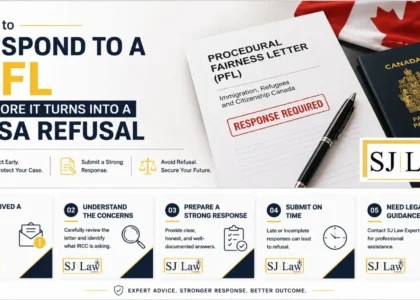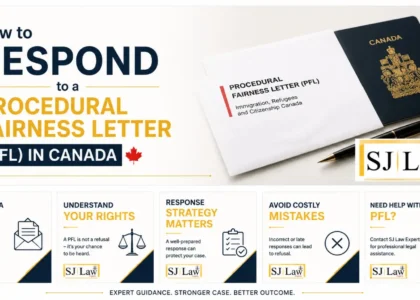
Immigration matters can be stressful, especially when you receive a procedural fairness letter Canada from Immigration, Refugees and Citizenship Canada (IRCC). Many applicants panic when they see this notice. However, a PFL is not an automatic refusal. It is an opportunity to respond and protect your application.At SJ Law Experts, we help applicants prepare a strong and strategic PFL response that addresses concerns clearly and professionally. In this article, we explain what a procedural fairness letter Canada means, why it is issued, and how to respond effectively.
What Is a Procedural Fairness Letter (PFL)?
A procedural fairness letter Canada is a formal notice issued by Immigration, Refugees and Citizenship Canada (IRCC) when an immigration officer has concerns about your application.
The purpose of the letter is to:
- Inform you about specific issues
- Provide evidence or concerns raised against you
- Give you a chance to explain or clarify
- Allow you to submit additional documents
This process ensures fairness under Canadian administrative law. Instead of refusing your application immediately, IRCC gives you an opportunity to respond.
Why Does IRCC Issue a Procedural Fairness Letter Canada?
A procedural fairness letter Canada may be issued for several reasons, including:
1. Misrepresentation Concerns: If the officer believes information provided is false, incomplete, or misleading.
2. Inadmissibility Issues
This may include:
- Criminal history
- Medical inadmissibility
- Security concerns
3. Employment or Education Doubts
For example:
- Questionable job reference letters
- Unverified educational credentials
4. Financial Insufficiency
If the officer believes your proof of funds is inadequate. Receiving a PFL doesn’t mean your case is lost. It simply means IRCC requires clarification before making a final decision.
Understanding the Importance of a Strong PFL Response
Your PFL response is your final opportunity to correct misunderstandings and present supporting evidence. A weak or incomplete response can lead to refusal.
A strong PFL response should:
- Directly address every concern listed
- Include clear explanations
- Provide documentary evidence
- Be professionally structured
- Be submitted within the deadline
Deadlines are strict. Most applicants receive 7 to 30 days to respond.
Step-by-Step Response Strategy by SJ Law Experts
Step 1: Carefully Review the Letter
Read the procedural fairness letter Canada multiple times. Identify:
- Specific allegations
- Supporting evidence cited by IRCC
- Legal sections mentioned
- Response deadline
Never assume the issue. Stick to what the letter states.
Step 2: Gather Supporting Evidence
Your explanation alone is not enough. Evidence strengthens your case.
Examples include:
- Updated bank statements
- Employment verification letters
- Tax records
- Police clearance certificates
- Medical reports
- Affidavits
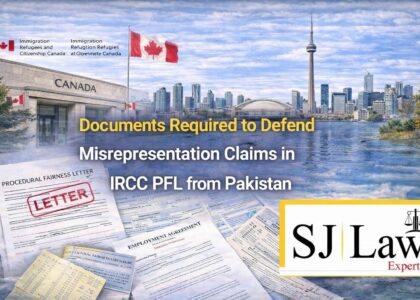
If misrepresentation is alleged, provide detailed documentation correcting the record.
Step 3: Draft a Clear and Professional Explanation
A strong PFL response includes:
- Introduction referencing the file number
- Summary of IRCC’s concerns
- Point-by-point rebuttal
- Attached evidence list
- Clear closing statement
The tone should remain respectful and factual. Avoid emotional language.
Step 4: Address Misrepresentation Carefully
Misrepresentation is serious under Canadian immigration law. If IRCC believes false information was provided, it may result in:
- Refusal
- 5-year ban from Canada
If there was a genuine mistake, explain it clearly and provide proof. If a consultant made the error, clarify the circumstances and submit supporting documents. Never ignore a misrepresentation allegation in your PFL response.
Step 5: Submit Before Deadline
Late submissions are often rejected.
Ensure:
- All documents are properly labeled
- PDF files are clear and readable
- Online portal uploads are confirmed
- Email submissions include attachments
Always keep a copy of your submission.
Common Mistakes in Responding to a Procedural Fairness Letter Canada
Avoid these common errors:
- Ignoring the letter
- Submitting incomplete evidence
- Providing emotional or aggressive replies
- Missing the deadline
- Copy-pasting generic templates
Every case is unique. A customized PFL response is critical.
What Happens After You Submit a PFL Response?
Once your response is submitted, IRCC will review:
- Your explanation
- Supporting documentation
- Legal arguments (if provided)
Possible outcomes:
- Application approved
- Request for additional documents
- Refusal
Even if refusal occurs, your strong PFL response can support future appeals or judicial review.
When Should You Seek Legal Help?
You should consult an immigration lawyer if:
- Misrepresentation is alleged
- Criminal inadmissibility is involved
- Your documents are complex
- You feel unsure how to respond
- A previous refusal exists
Legal representation ensures your PFL response is structured professionally and supported by Canadian immigration law principles.
Why Choose SJ Law Experts?
SJ Law Experts offer comprehensive support to individuals facing complex immigration challenges. Their team provides a detailed case assessment to carefully review the facts of your situation and identify the strongest legal approach. They prepare strategic and well-structured responses tailored to your specific circumstances, supported by thorough legal research to ensure accuracy and compliance with Canadian immigration laws. In addition, they conduct careful document verification to minimize errors and strengthen your submission. If necessary, they also provide professional appeal assistance to help safeguard your rights. The team understands how stressful receiving a procedural fairness letter Canada can be, and their goal is to protect your immigration future by delivering a strong, clear, and timely PFL response.
Frequently Asked Questions (FAQs)
1. Is a procedural fairness letter Canada a refusal?
No. It is an opportunity to respond before a final decision is made.
2. How much time do I get to submit a PFL response?
Usually between 7 to 30 days, depending on the case.
3. Can I ignore a PFL?
No. Ignoring it will likely result in refusal.
4. What if I cannot gather documents in time?
You may request an extension, but approval is not guaranteed.
5. Does a PFL mean I committed misrepresentation?
Not necessarily. It only means IRCC has concerns that require clarification.
6. Can a lawyer improve my chances?
Yes. A professionally prepared PFL response can significantly strengthen your case.
Conclusion
Receiving a procedural fairness letter in Canada can feel overwhelming. However, it is not the end of your immigration journey. It is your chance to clarify misunderstandings and provide additional proof. A well-prepared PFL response can mean the difference between approval and refusal. With careful planning, strong documentation, and professional legal guidance, you can protect your application and move forward with confidence. If you’ve received a PFL, don’t delay. Act quickly, respond strategically, and safeguard your future in Canada