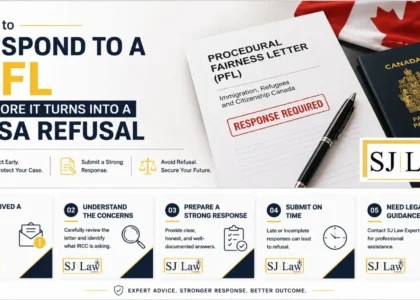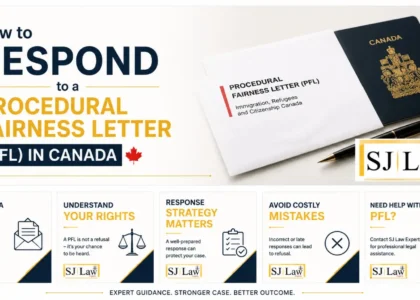
A Procedural Fairness Letter (PFL) from IRCC can feel stressful, but it’s actually your chance to explain and defend your application. Understanding why IRCC sends PFL, the reasons for PFL, and common IRCC fairness letter causes can help you respond correctly and protect your immigration future.
What Is a Procedural Fairness Letter (PFL)?
A Procedural Fairness Letter is an official notice from Immigration, Refugees and Citizenship Canada (IRCC). It informs you that an officer has concerns about your application and plans to refuse it unless you provide a valid explanation.
Simply put, it’s a warning before refusal.
Why IRCC Sends PFL
IRCC sends a PFL to follow legal fairness rules. Before refusing your application, they must:
- Inform you of concerns
- Give you a chance to respond
- Review your explanation
This ensures transparency and fairness in decision-making.
Top Reasons for PFL
Here are the most common reasons for PFL you should know:
1. Suspected Misrepresentation
This is the #1 reason. IRCC may believe you:
- Gave false information
- Submitted fake documents
- His previous refusals
This is a serious IRCC fairness letter cause.
2. Inconsistent Information
If details don’t match across:
- Forms
- Supporting documents
- Past applications
IRCC may question your credibility.
3. Insufficient Proof
You may receive a PFL if:
- Financial documents are weak
- Employment proof is unclear
- Relationship evidence is missing
IRCC wants stronger proof.
4. Criminal or Security Concerns
If your background check shows:
- Criminal records
- Security flags
IRCC may request an explanation.
5. Medical Inadmissibility
Health issues that:
- Risk public safety
- Burden healthcare system
Can trigger a PFL.
6. Relationship Authenticity Doubts
Common in:
- Spousal sponsorship
- Family visas
IRCC may suspect a fake marriage.
What IRCC Really Means
When IRCC sends a PFL, they’re saying:
“We found an issue. Explain it before we refuse.”
It’s not a rejection yet. It’s your chance to fix things.
How Long Do You Have to Respond?
Usually:
- 7 to 30 days
- Deadline is strict
- Late replies are ignored
Always check your letter.
How to Respond to a PFL
Your response should:
✔ Address every concern
✔ Provide strong evidence
✔ Be clear and honest
✔ Follow legal format
Never ignore a PFL.
Common Mistakes Applicants Make
❌ Emotional replies
❌ No evidence
❌ Missing deadline
❌ Writing too much
❌ Arguing with IRCC
Professional tone matters.
Can a PFL Be Avoided?
Yes! You can avoid most IRCC fairness letter causes by:
- Double-checking forms
- Being honest
- Using genuine documents
- Disclosing past refusals
- Consulting experts
How SJ Law Experts Can Help
SJ Law Experts provide professional support throughout your immigration process by carefully analyzing your Procedural Fairness Letter (PFL) to understand the concerns raised by IRCC. Their experienced legal team drafts strong and well-structured legal replies that directly address each issue, ensuring your response is clear and persuasive. They also help organize and present relevant evidence in a professional manner to strengthen your case. Additionally, SJ Law Experts communicate directly with IRCC on your behalf, ensuring all correspondence is accurate and timely. With their strategic guidance and expertise, your application becomes stronger, significantly increasing your chances of approval.
FAQs
1. Is a PFL a rejection?
No. It’s a warning before refusal.
2. Can I win after PFL?
Yes. Many cases get approved.
3. Should I hire a lawyer?
Highly recommended.
4. What if I ignore PFL?
Your application will be refused.
5. How long does it take to reply?
7–30 days.
Final Thoughts
Understanding why IRCC sends PFL, the real reasons for PFL, and common IRCC fairness letter causes can save your application. A PFL is serious—but it’s also an opportunity.
Respond carefully. Act fast. Get legal help if needed. Your Canadian dream isn’t over yet.