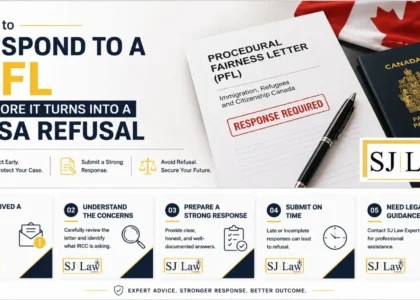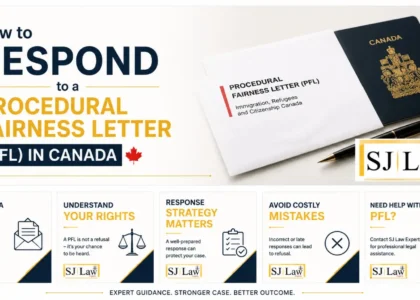

A spouse visa procedural fairness letter Canada applicants receive can feel intimidating. However, it’s not a refusal. Instead, it’s an opportunity. Canadian immigration law requires officers to give applicants a fair chance to respond before making a negative decision. That’s where the Procedural Fairness Letter, commonly called a PFL, comes in.
For applicants responding with a PFL response in Pakistan, understanding the purpose, structure, and expectations of IRCC (Immigration, Refugees and Citizenship Canada) is critical. Done right, a PFL response can correct misunderstandings, clarify evidence, and even reverse the course of your spouse visa case.
At sjlawexperts, we regularly assist families navigating this exact situation with confidence and clarity.
What Is a Procedural Fairness Letter?
A Procedural Fairness Letter is a formal notice from IRCC indicating concerns about your spouse visa application. These concerns may relate to the genuineness of the relationship, missing documents, or inconsistencies in information.
Importantly, a PFL:
- Is not a refusal
- Gives you a deadline to respond
- Requires a clear, evidence-based explanation
IRCC officers are legally obligated to consider your response before finalizing a refusal. This principle is rooted in Canadian administrative law and fairness doctrines.
Why IRCC Issues a PFL in Spouse Visa Applications
IRCC issues a PFL when an officer believes there may be grounds to refuse your application but must first hear your side. In spouse visa cases from Pakistan, officers often scrutinize applications more closely due to documentation standards, cultural marriage practices, and past fraud patterns.
Common triggers include:
- Short courtship periods
- Arranged marriages without sufficient proof
- Prior refusals or immigration history issues
Understanding these triggers helps you craft a targeted and effective response.
Common Reasons for PFLs in Spouse Visa Cases from Pakistan
Relationship Genuineness Concerns
This is the most frequent reason. Officers may doubt whether the marriage is genuine or entered into primarily for immigration purposes. They look at:
- Wedding photos and ceremonies
- Communication history
- Time spent together
Misrepresentation or Inconsistencies
Even small discrepancies—like mismatched dates or job titles—can raise red flags. IRCC may allege misrepresentation, which is serious and can lead to a five-year ban if not addressed properly.
Background, Security, or Document Issues
Missing police certificates, unclear Nikahnama translations, or unverifiable employment records can also prompt a PFL.
Legal Importance of a Procedural Fairness Letter
Your Right to Be Heard Under Canadian Immigration Law
Procedural fairness is a cornerstone of Canadian law. Before refusing a spouse visa, IRCC must:
- Clearly state its concerns
- Allow you reasonable time to respond
- Consider your explanation objectively
This legal safeguard protects applicants, especially those submitting a PFL response to Pakistan from abroad.
Consequences of Ignoring or Mishandling a PFL
Failing to respond—or responding poorly—almost guarantees refusal. Worse, inadequate explanations may strengthen IRCC’s concerns. That’s why a structured, legally sound response is essential.
Step-by-Step Process to Respond to a PFL from Pakistan
Step 1: Read and Analyze the PFL Carefully
Start by reading the letter multiple times. Identify:
- Specific allegations
- Evidence IRCC relies on
- Deadline for response
Never rush this step. A calm, methodical approach sets the foundation.
Step 2: Identify Allegations and Legal Concerns
Break down each concern separately. For example:
- Genuineness of marriage
- Financial dependency
- Prior immigration history
Addressing each point individually shows professionalism and clarity.
Step 3: Gather Strong Supporting Evidence
Evidence should be:
- Relevant
- Organized
- Easy to verify
Include translations where necessary and affidavits if helpful.
Step 4: Draft a Clear and Persuasive PFL Response
Your written response should:
- Be respectful and factual
- Avoid emotional language
- Directly answer IRCC’s concerns
This is where legal drafting skills matter most.
Step 5: Address Cultural and Regional Context
Pakistani marriages often involve extended families, religious customs, and arranged introductions. Explain these practices clearly so a Canadian officer can understand them in context.
Step 6: Review, Submit, and Track Your Response
Double-check everything. Submit through the correct IRCC portal before the deadline. Keep copies and confirmation receipts.
Evidence That Strengthens a Spouse Visa PFL Response
Relationship Evidence Checklist
| Evidence Type | Examples |
| Marriage Proof | Nikahnama, marriage registration |
| Photos | Engagement, wedding, family events |
| Communication | WhatsApp chats, call logs |
| Visits | Boarding passes, visas |
Financial and Communication Proof
Joint accounts, remittance receipts, and consistent communication logs can significantly strengthen your case.
Role of an Immigration Lawyer in PFL Responses
Why Professional Legal Help Matters
A PFL is a legal document. Responding without understanding immigration law can be risky. Lawyers help by:
- Identifying weak points
- Structuring legal arguments
- Reducing refusal risk
How sjlawexperts Supports PFL Cases from Pakistan
At sjlawexperts, we specialize in spouse visa procedural fairness letter Canada cases. Our team understands IRCC expectations and Pakistani documentation standards, giving your response a strategic edge.
Timelines and Deadlines for PFL Responses
Typical Response Periods
Most PFLs allow:
- 7 to 30 days to respond
- Extensions only in exceptional cases
Always respect deadlines.
What Happens After Submission
After review, IRCC may:
- Approve the application
- Request further documents
- Issue a refusal with reasons
For official guidance, you can refer to IRCC’s procedural fairness principles on the Government of Canada website:
https://www.canada.ca
Common Mistakes to Avoid in a PFL Response
- Ignoring specific allegations
- Submitting irrelevant documents
- Using emotional or defensive language
- Missing deadlines
Avoiding these mistakes can dramatically improve outcomes.
FAQs
1. Is a Procedural Fairness Letter a refusal?
No. It’s a warning and an opportunity to respond before refusal.
2. How long do I have to submit a PFL response from Pakistan?
Usually between 7–30 days, depending on the case.
3. Can I submit new evidence with my PFL response?
Yes, and you should if it directly addresses IRCC’s concerns.
4. Do I need a lawyer to respond to a PFL?
Not mandatory, but highly recommended due to legal complexity.
5. What happens if my PFL response is weak?
IRCC may proceed with refusal, citing unresolved concerns.
6. Can a strong PFL response lead to approval?
Absolutely. Many spouse visa cases are approved after a well-prepared response.
Conclusion
Receiving a spouse visa procedural fairness letter Canada doesn’t mean the end of your journey. For applicants preparing a PFL response to Pakistan, it’s a critical second chance. With the right strategy, clear evidence, and professional guidance, a PFL can become the turning point toward approval.
By approaching the process calmly, addressing concerns directly, and leveraging expert support like sjlawexperts, you maximize your chances of reuniting with your spouse in Canada.