Marriage disputes can create emotional, financial, and legal challenges. When reconciliation becomes impossible, many women seek legal separation through Khula. However, misunderstandings about court procedures, documentation, and legal rights often make the process appear complicated. Understanding the Khula Procedure Pakistan can help women pursue legal remedies while avoiding unnecessary delays and complications.
Khula is a legal right available to Muslim women under Pakistani family law. Unlike verbal divorce initiated by the husband, Khula generally requires court proceedings and judicial involvement. This guide explains the Khula process in Pakistan, required documents, legal steps, and common mistakes to avoid.
Understanding Khula Under Pakistani Law
Khula is a legal dissolution of marriage sought by a wife through Family Court where continuation of marriage becomes difficult or impossible.
Khula cases often arise due to:
- Irreconcilable differences
- Domestic conflict
- Lack of compatibility
- Emotional hardship
- Marital breakdown
- Separation disputes
The court evaluates whether reconciliation is possible before dissolving marriage. Understanding the Khula Procedure Pakistan helps applicants navigate the legal system more confidently.
Difference Between Khula and Divorce in Pakistan
Many people confuse Khula with divorce. A husband may initiate divorce through Talaq procedures, while Khula is generally sought by the wife through Family Court.
Important differences include:
Talaq
- Initiated by husband
- Union Council process follows notice
- May occur without court litigation in some situations
Khula
- Initiated by wife
- Requires judicial process
- Family Court involvement is usually necessary
This distinction remains important under Pakistani family law.
Who Can File Khula in Pakistan?
A married Muslim woman may file Khula where marital relations become unbearable or continuation of marriage becomes impossible.
Common situations include:
- Long separation
- Abuse or mistreatment
- Lack of maintenance
- Serious incompatibility
- Persistent disputes
The court focuses on marital breakdown and practical impossibility of reconciliation.
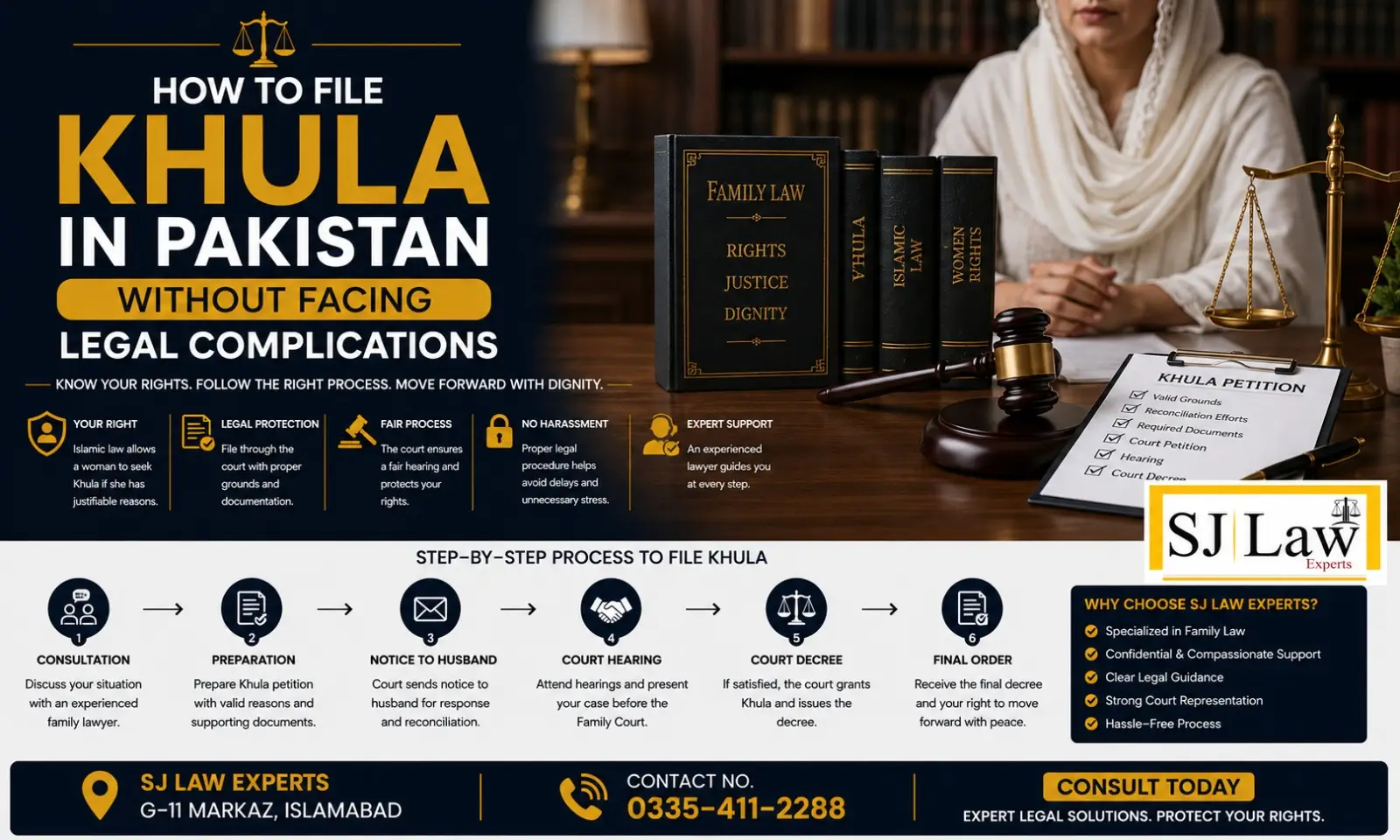
Step-by-Step Khula Procedure Pakistan
Khula generally but fails to explain practical filing stages. The Khula Procedure Pakistan usually involves several steps.
Step 1: Consult a Family Law Professional
Before filing, legal consultation may help applicants understand rights and documentation. A qualified Divorce lawyer Islamabad or family lawyer may assist with:
- Case evaluation
- Court jurisdiction
- Documentation
- Legal strategy
Early advice may reduce procedural problems.
Step 2: Prepare Required Documents
Proper documentation remains essential. Common documents include:
- CNIC copies
- Marriage certificate (Nikahnama)
- Address details
- Supporting evidence where relevant
- Photographs or identification records
Incomplete documentation may delay proceedings.
Step 3: File Family Suit Khula
The next stage involves filing a Family suit khula before the competent Family Court. The petition generally includes:
- Marriage details
- Grounds for Khula
- Request for dissolution
- Relevant facts
Court filing officially begins proceedings. A properly drafted Family suit khula often reduces procedural objections.
Step 4: Court Notice to Husband
After filing, Family Court issues notice to the husband. The respondent receives opportunity to:
- Appear in court
- Submit reply
- Present objections
- Participate in reconciliation efforts
Procedural fairness remains part of family litigation.
Step 5: Reconciliation Proceedings
This stage is often overlooked by competitors. Family Courts generally attempt reconciliation before final decision.
The court may:
- Hear both parties
- Encourage settlement
- Explore marital resolution
Where reconciliation fails, proceedings continue. This forms an important part of the Khula process in Pakistan.
Step 6: Khula Decree by Family Court
If reconciliation proves impossible and legal requirements are satisfied, the court may grant Khula decree. The decree dissolves marriage through judicial order. Afterward, procedural formalities involving Union Council and legal records may follow. Court procedure should be completed carefully to avoid future complications.
Role of Union Council After Khula
Competitor content frequently misses this point. Court decree alone may not complete all administrative steps. Relevant authorities may process:
- Dissolution records
- Notice formalities
- Official documentation
Applicants should ensure legal paperwork is properly completed.
Khula and Haq Mehr Issues
Khula sometimes raises financial questions.
The court may consider:
- Return of Haq Mehr
- Agreed settlement
- Property matters
- Financial arrangements
Every case depends on facts and court findings. Applicants should understand potential financial implications before filing.
Child Custody and Maintenance After Khula
Khula does not automatically determine custody issues. Separate proceedings may address:
- Child custody
- Guardianship
- Visitation
- Maintenance
Family Courts generally prioritize child welfare. These matters often require independent legal evaluation.
Common Legal Complications in Khula Cases
Many procedural delays occur due to avoidable mistakes. Common problems include:
- Incorrect Documentation: Missing documents create delays.
- Wrong Court Jurisdiction: Improper filing may cause objections.
- Delayed Response to Court Notices: Ignoring proceedings complicates litigation.
- Poor Legal Drafting: Weak pleadings may create procedural issues.
Understanding the Khula Procedure Pakistan helps avoid these complications.
How Long Does Khula Process Pakistan Take?
Duration depends on:
- Court workload
- Reconciliation proceedings
- Service of notices
- Case complexity
- Cooperation of parties
Some cases conclude faster than others. Timely documentation and proper legal handling often reduce delays.
Why Professional Legal Guidance Matters
Although some women attempt self-filing, legal guidance may help avoid technical mistakes. A skilled Divorce lawyer Islamabad may assist with:
- Drafting petitions
- Filing Family suit khula
- Court representation
- Legal strategy
- Documentation review
Professional support often improves efficiency.
How SJ Law Experts Helps
At SJ Law Experts, we assist women and families with Khula, divorce, custody, maintenance, and Family Court litigation in Islamabad and across Pakistan. Our legal team helps clients understand the Khula Procedure Pakistan, prepare documentation, and pursue lawful solutions through careful case handling and professional representation. We focus on protecting family rights while reducing unnecessary legal complications.
Final Thoughts
Filing Khula does not need to become legally overwhelming when applicants understand their rights and court procedures. Learning the Khula Procedure Pakistan, preparing accurate documents, and following Family Court requirements can significantly reduce complications. Whether involving reconciliation, custody, or financial matters, informed legal guidance often helps women navigate the Khula process in Pakistan with greater confidence and legal clarity.
Can a woman file Khula without husband consent?
Family Court may grant Khula where reconciliation fails and legal conditions are met.
Is Khula different from divorce?
Yes. Khula is generally initiated by the wife through court proceedings.
How long does the Khula process in Pakistan take?
Timelines vary depending on court procedures and case circumstances.
Do I need a Divorce lawyer Islamabad for Khula?
Legal guidance may help avoid procedural mistakes and delays.