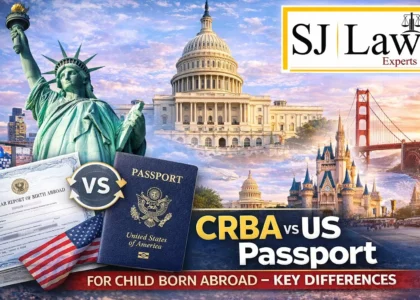
Many Pakistani families with ties to the United States often ask an important legal question: Can a child born in Pakistan get US citizenship? The answer is yes, but only under specific legal conditions. The process is not automatic and depends heavily on the status of the parents and compliance with strict US immigration rules. This process is known as US Citizenship CRBA, short for Consular Report of Birth Abroad. It is the official document that confirms a child born outside the United States has acquired US citizenship at birth through a qualifying American parent.
Understanding how CRBA works is essential because a small mistake in eligibility or documentation can delay or even deny citizenship recognition. This guide explains everything step-by-step, including eligibility, requirements, and the CRBA Application Pakistan Step by Step Guide for families applying through the US Embassy in Islamabad or other consular offices.
What is the US Citizenship CRBA?
The US Citizenship CRBA (Consular Report of Birth Abroad) is an official certificate issue by the US Department of State. It confirms that a child born outside the United States has acquired US citizenship at birth through one or both parents. Unlike naturalization, CRBA does not require the child to live in the US or apply later in life. Instead, citizenship is granted automatically at birth if legal conditions are met. Think of CRBA as a “birthright confirmation document.” It does not create citizenship, it proves it. For Pakistani families, this document is typically process through the US Embassy in Islamabad or US Consulate services serving Pakistan.
Can a Child Born in Pakistan Get US Citizenship?
Yes, a child born in Pakistan can get US citizenship if at least one parent is a US citizen and meets the physical presence requirements under US law. However, citizenship is not automatic just because a parent is American. The US government strictly evaluates whether the parent has lived in the United States long enough before the child’s birth. This is where many applications face complications. Families often assume nationality alone is enough, but Can Child Born Abroad Get US Citizenship Pakistan depends on legal residency history and documentation.
Eligibility for US Citizenship CRBA
To qualify for US Citizenship for Child Born in Pakistan Process, the following conditions must be met:
1. At Least One Parent Must Be a US Citizen: The child must have at least one biological parent who is a US citizen at the time of birth.
2. Physical Presence Requirement: The US citizen parent must have lived in the United States for a minimum period before the child’s birth (requirements vary depending on whether both parents are US citizens or only one).
3. Proof of Biological Relationship: DNA evidence or official birth records may be required to establish parent-child relationship.
4. Legal Marriage Status (if applicable): If parents are married, marriage certificates must be submitted. If not, additional legal proof of paternity may be required. Without meeting these requirements, CRBA approval is not possible.
CRBA Pakistan US Citizen Child Requirements
When applying from Pakistan, the US Embassy in Islamabad requires specific documents. These are part of the CRBA Pakistan US Citizen Child Requirements checklist:
- Child’s original birth certificate issued in Pakistan
- Parents’ passports (Pakistani and US passports if applicable)
- US citizen parent’s proof of residency in the United States
- Marriage certificate (if parents are marriege)
- Evidence of relationship (photos, records, etc.)
- DS-2029 application form (CRBA form)
- DS-11 passport application for child (if applying for passport simultaneously)
All documents must be accurate and consistent. Even minor discrepancies in names or dates can delay approval.
CRBA Application Pakistan Step by Step Guide
Applying for US Citizenship CRBA from Pakistan involves a structured process through the US Embassy.
1 Complete Online Forms: Parents must complete the required forms, including DS-2029 (CRBA application) and DS-11 (passport application).
Gather Required Documents: Prepare all supporting documents such as birth certificates, passports, and proof of US citizenship of the parent.
Schedule Appointment at US Embassy Islamabad: Applicants must book an appointment for interview and document submission at the US Embassy or Consulate.
Attend Interview: Both parents and the child (if required) must attend the interview. The consular officer verifies documents and asks questions about the family background.
Await Decision: If approved, the CRBA certificate and US passport for the child are issued. If additional review is required, processing may take longer. This structured process ensures that citizenship claims are verified carefully before approval.
Common Reasons CRBA Applications Get Delay or Denied
Many families face delays due to avoidable mistakes. Common issues include:
- Insufficient proof of US physical presence
- Incomplete or inconsistent documents
- Errors in birth registration details
- Lack of legal proof of parent-child relationship
- Missing embassy appointment documents
A small documentation error can lead to months of delay.
Importance of Physical Presence Requirement
One of the most critical aspects of US Citizenship CRBA is the physical presence rule. The US government requires proof that the American parent has lived in the United States for a specific number of years before the child’s birth. This requirement ensures that citizenship is not passed automatically without a meaningful connection to the US. For many Pakistani applicants, this becomes the most challenging part of the process.
CRBA vs Naturalization: Key Difference
| Feature | CRBA | Naturalization |
| Citizenship Type | At birth | After birth |
| Application Time | Immediately after birth | Later in life |
| Eligibility | US citizen parent | Residency in US |
| Process Location | US Embassy (Pakistan) | Inside United States |
CRBA is significantly faster and simpler if eligibility is clear.
Processing Time for CRBA in Pakistan
Processing time depends on case complexity and document accuracy. In most cases, it can take a few weeks to a few months.
Delays occur when:
- Additional verification is required
- Documents are incomplete
- Embassy workload is high
Role of Legal or Immigration Guidance
Although CRBA is a government process, many families seek legal assistance to avoid mistakes. Immigration professionals help ensure:
- Proper document preparation
- Correct interpretation of eligibility rules
- Avoidance of embassy rejections
- Smooth interview preparation
This is especially helpful in complex cases involving previous marriages, missing documents, or unclear residency history.
Final Thoughts
A child born in Pakistan can absolutely obtain US citizenship, but only through the structured legal process of US Citizenship CRBA. The process depends heavily on the US citizen parent’s eligibility, documentation accuracy, and compliance with embassy requirements. Understanding the CRBA Application Pakistan Step by Step Guide helps families avoid delays and improve approval chances. With proper preparation, the process is straightforward and secure. For Pakistani families with US ties, CRBA is not just paperwork,it is the legal bridge that connects a child to American citizenship from birth.
1. Can a child born in Pakistan automatically get US citizenship?
No. Citizenship is grant only if at least one parent meets US legal requirements.
2. Where do I apply for CRBA in Pakistan?
Applications are process through the US Embassy in Islamabad.
3. How long does CRBA approval take?
It can take a few weeks to several months depending on the case.
4. Is DNA test required for CRBA?
Not always, but it may be request in disputed or unclear cases.
5. Can CRBA be denied?
Yes, if eligibility or documentation requirement are not met.