
By SJ Law Experts – Trusted Landlord & Tenant Lawyers in Islamabad
Introduction
Eviction cases in Islamabad can be legally complex and emotionally challenging for both landlords and tenants. Understanding the eviction process, legal requirements, and rights of both parties is essential to avoid costly mistakes.
At SJ Law Experts, our team of experienced landlord–tenant lawyers has handled numerous eviction petitions under the Islamabad Rent Restriction Ordinance, 2001. This FAQ guide answers the most common questions about eviction in Islamabad — based on real legal experience and practical courtroom expertise.
1. What Is an Eviction in Islamabad?
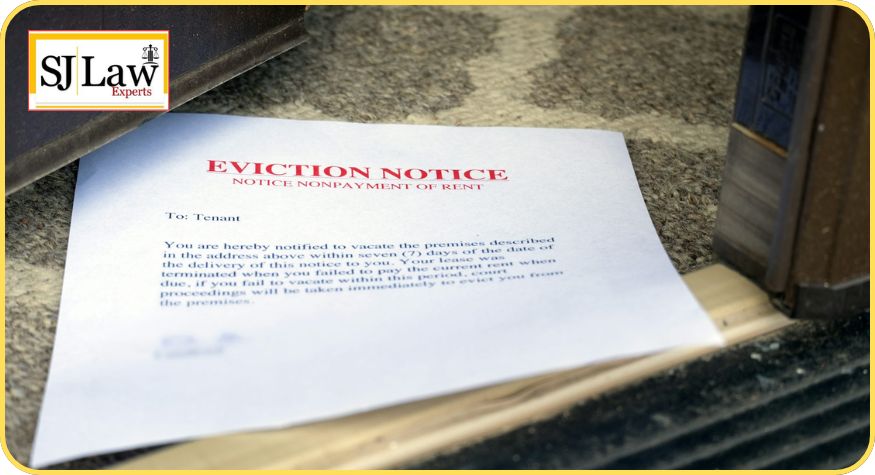
Eviction is a legal process where a landlord seeks possession of rented property from a tenant through the Rent Controller. It is not just a notice — it’s a formal legal procedure that must follow the law. Under Pakistani law, no landlord can evict a tenant without a court order. Any act of self-help eviction (such as changing locks or cutting utilities) is illegal and can lead to criminal proceedings.
2. What Are the Legal Grounds for Eviction?
The Islamabad Rent Restriction Ordinance, 2001 allows eviction only under specific conditions:
- Non-payment of rent for two consecutive months
- Violation of tenancy agreement (e.g., using the property for a different purpose)
- Subletting without written permission
- Property required for personal use or reconstruction
- Expiry of tenancy period
📘 Expert Insight:
At SJ Law Experts, we always recommend keeping written rental agreements and rent receipts, as they are essential evidence in eviction cases.
3. What Is the Legal Procedure for Eviction in Islamabad?
The eviction process typically involves these steps:
- Issuing a legal notice to the tenant (commonly a 30-day notice).
- Filing an eviction petition before the Rent Controller.
- Submitting supporting documents, such as rent receipts and agreements.
- Court hearings where both sides present their arguments.
- Issuance of eviction order by the Rent Controller.
⏱️ Timeline: Simple cases may take 3–6 months, while disputed cases may take longer due to appeals or procedural delays.
4. Can a Landlord Evict Without a Court Order?
❌ No. Evicting a tenant without a court order is strictly prohibited. Any attempt to do so can result in civil penalties and criminal charges under Pakistani law.
✔️ Lawful eviction only occurs after a Rent Controller’s order is enforced by a bailiff.
5. What Can a Tenant Do After Receiving an Eviction Notice?
If you’re a tenant served with an eviction notice:
- Don’t ignore it. File a timely reply.
- Consult a professional lawyer immediately.
- Gather proof of rent payments and communication records.
- Attend all court hearings to defend your case.
📘 Expert Advice:
At SJ Law Experts, we have helped tenants protect their rights by challenging unlawful eviction notices based on weak or false grounds.
6. What Happens After the Eviction Order?
Once the Rent Controller grants eviction, the tenant is usually given 30 days to vacate the premises voluntarily. If the tenant refuses, the court’s bailiff will take possession and hand it over to the landlord. The landlord then gains lawful possession of the property.
7. Can Tenants Appeal an Eviction Order?
Yes, tenants can file an appeal before the District Court within 30 days of the Rent Controller’s order.
However, the appeal must show that the law was misapplied or the facts were wrongly interpreted.
📘 Practical Tip:
Appeals delay possession, but they must have solid legal reasoning — otherwise, they get dismissed quickly.
8. Common Mistakes Landlords Make in Eviction Cases
Many landlords lose eviction cases due to avoidable mistakes, such as:
- No written rent agreement
- Skipping the legal notice
- Filing incomplete documentation
- Attempting self-eviction
✅ Expert Recommendation:
Always consult a qualified eviction lawyer in Islamabad before filing any case. Legal representation ensures compliance and avoids costly errors.
9. Why Should You Hire an Eviction Lawyer in Islamabad?
Hiring an experienced lawyer ensures that:
- All legal documents are correctly drafted
- Eviction petitions are filed according to local laws
- Court representation is professional and strategic
- Possession is lawfully recovered after judgment
At SJ Law Experts, we specialize in landlord-tenant disputes, providing personalized guidance from notice to possession.
10. How Long Does an Eviction Case Usually Take?
The duration varies depending on the complexity of the case:
| Case Type | Average Duration | Common Delays |
| Simple non-payment case | 3–6 months | Tenant non-appearance |
| Contested eviction | 6–12 months | Appeals or adjournments |
| Illegal occupation | 1 year or more | Police enforcement delays |
⚖️ Experience Tip:
Timely filing and proper documentation significantly reduce case delays.
Conclusion
Eviction in Islamabad follows a structured legal process designed to protect both landlords and tenants. Whether you are filing an eviction petition or defending against one, understanding your rights under the Islamabad Rent Restriction Ordinance is critical.
For legal guidance, representation, or documentation assistance, contact SJ Law Experts — your trusted partner for Eviction Petition Law and Landlord & Tenant Disputes in Islamabad.