
For many Pakistani families, reuniting with loved ones in the United States begins with a USCIS family-based petition. Whether you are sponsoring your parents or children, understanding the process is essential to avoid delays and refusals. This guide explains the key steps for USCIS petitions for parents and children, with a focus on USCIS parent petition Pakistan and USCIS family petition Islamabad cases.
What Is a USCIS Family-Based Petition?
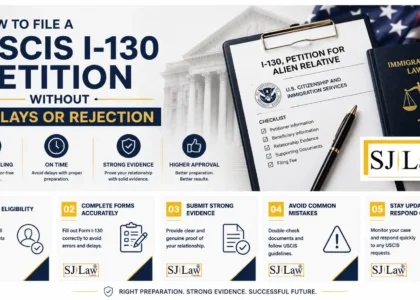
A USCIS family-based petition allows U.S. citizens and lawful permanent residents to sponsor eligible relatives for permanent residence (a green card). The process typically starts with Form I-130 (Petition for Alien Relative), which establishes a qualifying family relationship.
Who Can File a USCIS Petition?
1. U.S. Citizens
U.S. citizens may file petitions for:
- Parents (if the petitioner is at least 21 years old)
- Children (biological, step, or adopted)
- Spouses
Parents and unmarried children under 21 are considered immediate relatives, meaning there is no annual visa cap.
2. Lawful Permanent Residents (Green Card Holders)
Green card holders may petition for:
- Unmarried children
- Spouses
These cases fall under preference categories and may involve longer waiting periods.
USCIS Parent Petition Pakistan: Step-by-Step Process
Step 1: File Form I-130 with USCIS
To start a USCIS parent petition Pakistan, the U.S. citizen child must file Form I-130 with:
- Proof of U.S. citizenship
- Parent’s birth certificate showing the relationship
- Marriage or legal documents (if applicable)
Accuracy at this stage is critical to avoid Requests for Evidence (RFEs).
Step 2: USCIS Review and Approval
USCIS verifies the family relationship and reviews supporting documents. If satisfied, the petition is approved and forwarded to the National Visa Center (NVC).
Step 3: National Visa Center Processing
At the NVC stage:
- Fees are paid
- Affidavit of Support is submitted
- Civil documents are uploaded
This step prepares the case for consular processing in Pakistan.
USCIS Family Petition Islamabad: Consular Processing
For beneficiaries residing in Pakistan, interviews are conducted at the U.S. Embassy in Islamabad. This applies to both parents and children.
What to Expect at the Interview
- Medical examination before the interview
- Submission of original documents
- Questions to confirm family relationship and eligibility
A successful interview results in an immigrant visa approval.
Petitioning for Children Born Outside the U.S.
For Pakistani families filing for children:
- Birth certificates must clearly establish parentage
- Stepchild and adopted child cases require additional legal proof
- Age and marital status of the child affect eligibility
Early legal guidance is especially important for complex family situations.
Common Challenges for Pakistani Families
Many USCIS family petition Islamabad cases face delays due to:
- Incomplete or inconsistent documentation
- Errors in Form I-130
- Weak proof of relationship
- Delays in NVC submissions
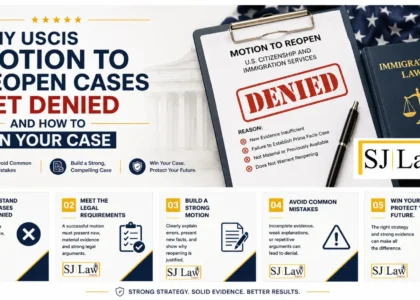
Avoiding these mistakes can significantly reduce processing time.
How sjlawexperts Can Support Your Case
Navigating a USCIS parent petition Pakistan or USCIS family petition Islamabad can be overwhelming. sjlawexperts provides professional immigration assistance, including:
- Form I-130 preparation and filing
- Document review for Pakistan-issued records
- NVC and embassy interview preparation
- End-to-end family immigration support
Their experience helps Pakistani families move through the process smoothly and confidently.
Final Thoughts
Filing a USCIS petition for parents and children is a powerful step toward family reunification. By understanding eligibility requirements, preparing accurate documentation, and following each stage carefully, Pakistani families can improve their chances of success.
For those navigating USCIS parent petition Pakistan or USCIS family petition Islamabad cases, professional guidance can make the journey faster and less stressful.