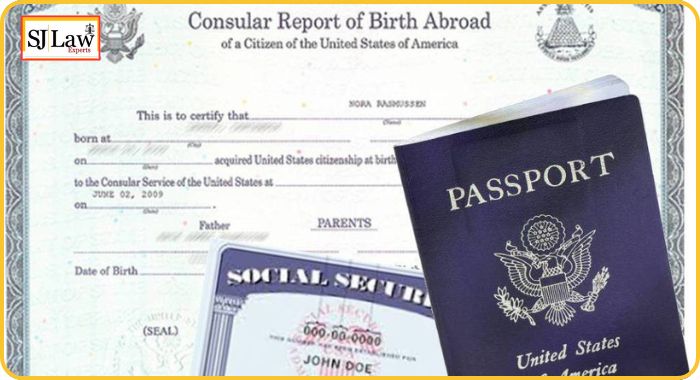
Introduction to CRBA
A Consular Report of Birth Abroad (CRBA) is an official document issued by the U.S. government to certify that a child born outside the United States is a U.S. citizen at birth. For parents living in Pakistan, understanding CRBA eligibility in Pakistan is essential for securing legal citizenship rights for their children.
Obtaining a CRBA is often the first step in ensuring that your child can access the benefits of U.S. citizenship, including passports, Social Security numbers, and the right to live and work in the United States.
What Is a CRBA?
A CRBA, also known as Form DS-2029, serves as proof of U.S. citizenship for children born abroad. Unlike a U.S. passport, which also shows citizenship, the CRBA is primarily used for legal purposes, such as enrolling in school or claiming inheritance rights.
It confirms that a child automatically acquired U.S. citizenship at birth because at least one parent is a U.S. citizen who met specific residency or physical presence requirements.
Why CRBA Matters for Children Born Abroad
Children born outside the U.S. may not automatically receive citizenship documents. Without a CRBA:
- They cannot obtain a U.S. passport
- They may face difficulties with legal or employment matters in the U.S.
- Rights to inherit property in the U.S. may be limited
- Proof of citizenship could be delayed if needed for school or travel
Securing a CRBA early ensures that a U.S. citizen child born abroad can exercise their full rights.
CRBA Eligibility Pakistan: Who Qualifies
Children of U.S. Citizen Parents
A child born in Pakistan can qualify for a CRBA if at least one parent is a U.S. citizen who meets the residency requirements:
- The U.S. citizen parent must have lived in the United States for at least five years, with at least two years after age 14, before the child’s birth.
- Both married and unmarried U.S. citizen parents can transmit citizenship under different rules.
Children Born Out of Wedlock
The rules are slightly different for children born out of wedlock:
- Mother is U.S. citizen: Citizenship is automatically transmitted if the mother meets the physical presence requirements.
- Father is U.S. citizen: Additional legal steps are needed, including acknowledgment of paternity and commitment to financially support the child.
Each scenario requires careful documentation to prove the parent’s U.S. citizenship and compliance with residency requirements.
Documentation Required for CRBA
To apply for a CRBA in Pakistan, the following documents are typically required:
- Child’s birth certificate issued in Pakistan
- Parents’ valid passports and proof of U.S. citizenship
- Marriage certificate of parents (if applicable)
- Evidence of the U.S. citizen parent’s physical presence in the U.S.
- Photos of the child
- Form DS-2029, filled and signed
Additional documents may be requested depending on your circumstances, such as divorce decrees, adoption papers, or affidavits from family members.
Step-by-Step CRBA Application Process in Pakistan
- Schedule an Appointment: Contact the nearest U.S. Embassy or Consulate in Pakistan.
- Prepare Documentation: Gather all required forms and proof of citizenship and relationship.
- Attend Interview: Both parents (and the child, if required) must attend the interview.
- Submit Form DS-2029: Ensure all sections are complete and accurate.
- Pay Fees: CRBA processing fees apply and must be paid at the time of submission.
- Wait for Processing: Embassy reviews the documents and determines eligibility.
- Receive CRBA Certificate: Once approved, your child is officially recognized as a U.S. citizen child born abroad.
Common Mistakes to Avoid
- Missing deadlines for document submission
- Submitting incomplete forms or inaccurate information
- Not including proof of U.S. citizen parent’s residency
- Ignoring requirements for children born out of wedlock
- Relying on unofficial translations of documents
Avoiding these errors can prevent delays and possible denial of the CRBA.
Timelines and Processing
CRBA processing times in Pakistan may vary depending on embassy workload. Typically:
- Appointment scheduling: 2–6 weeks
- Document verification: 4–8 weeks
- Certificate issuance: 1–2 weeks after approval
Early application is highly recommended, especially if the child will need a U.S. passport for travel.
FAQs
1. What is CRBA eligibility in Pakistan?
CRBA eligibility Pakistan requires that the child is born in Pakistan and has at least one U.S. citizen parent who meets physical presence requirements in the U.S.
2. Can both parents be non-U.S. citizens and still get CRBA?
No. At least one parent must be a U.S. citizen to transmit citizenship.
3. Can children born out of wedlock apply for CRBA?
Yes. Special rules apply depending on whether the U.S. citizen parent is the mother or father.
4. How long does CRBA processing take in Pakistan?
Typically between 6 to 12 weeks, depending on embassy workload.
5. Do I need to hire a lawyer for CRBA application?
Not required, but legal guidance helps ensure all documents meet U.S. immigration requirements.
Conclusion
Understanding CRBA eligibility in Pakistan is crucial for parents who want to secure U.S. citizenship for their children born abroad. By gathering proper documentation, following embassy procedures, and ensuring compliance with residency requirements, you can successfully obtain a Consular Report of Birth Abroad and protect your child’s rights as a U.S. citizen.