
Sadia Javed, Advocate High Court Property Lawyer, Islamabad | SJ Law Experts
Introduction
Non-payment of rent is one of the most common disputes between landlords and tenants in Pakistan. Many landlords face tenants who stop paying rent for months, while tenants sometimes suffer from unlawful eviction threats.
As an experienced property lawyer in Islamabad, I have dealt with numerous tenancy cases and will explain the legal framework, rights, procedures, and remedies available to both landlords and tenants in cases of rent default.
1. What is Non-Payment of Rent?
Non-payment of rent refers to a tenant’s failure to pay the agreed monthly rent as per the tenancy agreement or the relevant tenancy law.
It usually becomes actionable if rent is unpaid for two or more consecutive months without a valid reason.
Examples include:
- Delays beyond the due date
- Partial payments
- Refusal to pay due to disputes
- Tenant absconding without paying rent
2. Tenancy Laws Governing Rent in Pakistan
Each province in Pakistan has its own tenancy laws:
- Islamabad: Islamabad Rent Restriction Ordinance, 2001
- Punjab: Punjab Rented Premises Act, 2009
- Sindh: Sindh Rented Premises Ordinance, 1979
- KPK: West Pakistan Urban Rent Restriction Ordinance, 1959 (amended)
- Balochistan: Balochistan Rent Restriction Ordinance, 1978
These laws define the rights and obligations of both landlords and tenants, along with procedures for dispute resolution and eviction.
3. Rights of the Landlord in Case of Non-Payment
A landlord can legally:
- Issue a notice to the tenant for rent default
- Demand arrears of rent and unpaid utility bills
- File a rent petition or eviction case before the Rent Controller
- Seek damages for breach of agreement
- Terminate the tenancy agreement
4. Rights of the Tenant
While tenants must pay rent on time, they also enjoy protections:
- Right to receive proper legal notice before eviction
- Right to contest unfair rent increases or eviction threats
- Right to request time to clear dues in certain situations
- Right to demand repairs or promised services under the agreement
If coerced or threatened, tenants may approach the Rent Controller or a civil court.
5. Legal Procedure for Rent Recovery
The process typically involves:
- Legal Notice – Landlord serves written notice, usually 15–30 days.
- Filing a Petition – If unpaid, the landlord files a rent petition under tenancy law.
- Summons to Tenant – Court issues notice for tenant to appear and reply.
- Evidence Submission – Landlord provides tenancy agreement, receipts, bank records, and notice.
- Final Decision – Court may order eviction and recovery of arrears.
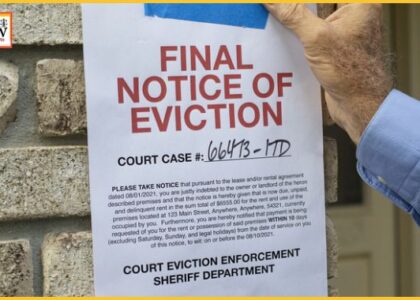
6. Eviction Proceedings
Non-payment of rent is a valid legal ground for eviction.
The Rent Controller may pass an eviction decree if:
- Rent remains unpaid for two or more months
- Tenant fails to respond to legal notice
- Tenant has no valid justification
If the tenant refuses to vacate, the decree is enforced by a court bailiff.
7. Defenses Available to Tenants
A tenant may defend against eviction by proving:
- Rent was already paid (with proof)
- Landlord refused to accept rent
- Rent amount or due date is disputed
- Landlord failed to provide essential repairs/services
- Financial hardship with willingness to pay (court may allow installments)
8. Consequences for Tenants of Rent Default
If the tenant loses the case, consequences include:
- Immediate eviction
- Recovery suit for unpaid rent
- Loss of security deposit
- Damage to rental history/reputation
- Liability for legal costs
9. How SJ Law Experts Can Help
At SJ Law Experts, we specialize in tenancy disputes and provide services for both landlords and tenants:
- Drafting and vetting tenancy agreements
- Serving legal notices for rent default
- Filing eviction and rent recovery cases
- Representing tenants facing unlawful eviction
- Providing expert legal advice and negotiations
Frequently Asked Questions (FAQs)
Q1: Can a landlord evict a tenant without a court order?
A: No. Eviction without a Rent Controller’s decree is illegal.
Q2: How long does eviction for non-payment take?
A: Generally 2 to 4 months, depending on court schedules.
Q3: What if the landlord refuses to accept rent?
A: Tenants can deposit rent directly in court.
Q4: Is a verbal rent agreement valid?
A: Legally risky. Always have a written tenancy agreement.
Q5: Can a landlord claim double rent for overstaying?
A: Yes, through mesne profits or double rent after an eviction decree.
Conclusion
Non-payment of rent is a serious breach of tenancy law. Landlords must follow legal procedures for eviction and recovery, while tenants must ensure timely payments and keep proper records.
For landlords and tenants in Islamabad or Rawalpindi, SJ Law Experts provides experienced legal representation to safeguard your property rights.
Contact SJ Law Experts
📞 Phone: +92-335-4112288
📍 Address: Office No. 1, First Floor, Al Anayat Mall, G-11 Markaz, Islamabad
🌐 Website: SJ Law Experts – Eviction Petition Law
With SJ Law Experts, you protect your property rights with confidence.